
Electric car accessories: 7 useful upgrades for everyday driving
2026-10-06

The most useful electric car accessories aren’t necessarily the most high-tech. They’re the ones that solve a small, regular annoyance, from a messy boot to charging cables that are difficult to store.
With so many options available, it’s easy to buy something that rarely gets used or doesn’t suit your vehicle. A poor fit can take up useful space or get in the way of controls. Start with the problem you want to solve, then check compatibility and how the accessory will work in your car.
This guide covers seven accessory categories that can make everyday EV ownership tidier, more comfortable and easier to manage. It looks at protective mats, cable storage, sunshades and portable charging gear, along with the checks to make before buying. Start with the inconvenience you notice most often, and prioritise an accessory that suits your specific vehicle and routine.
Key Takeaways
- Choose electric car accessories by the recurring task you want to make easier, not by novelty.
- Compare cabin protection options by the coverage you need and the effort involved in keeping them clean.
- Match organisers to your vehicle’s available space, and make sure they don’t block normal access.
- Prioritise purchases in order: identify the need, check vehicle fit, then consider upkeep and frequency of use.
- Build a shortlist around your own routine, whether it calls for cabin, boot, protection or charging storage solutions.
Table of Contents
- Electric car accessories for everyday driving: what is worth considering?
- Electric car accessories that protect the cabin and keep it comfortable
- Electric car accessories for a tidier cabin, boot and charging setup
- How to prioritise electric car accessories before you buy
- Make electric car accessories part of a more practical EV routine
Electric car accessories for everyday driving: what is worth considering?
Useful accessories solve a recurring problem without adding clutter. They can make a regular driving task easier, help protect an area you use often or keep essential items organised.
The right choice depends on what happens in your car day to day. You might want more comfort, less mess, better protection or a tidier way to manage charging cables. These are practical categories to consider, not a definitive list of must-have purchases. An item that suits one driver’s routine may take up space without helping another.
Start with the driving task, not the product list
Think about the annoyance you notice repeatedly. Is dirt collecting in the footwell? Do loose items shift around the boot? Do you want to reduce glare or protect an exposed surface? Write down the problem before browsing, then separate daily needs from accessories you’d use only on occasional trips or prefer for personal reasons.
Your vehicle’s layout and your habits both matter. A driver who carries sports gear may value boot organisation, while someone who regularly handles charging cables may want a neater way to store them. Prioritise what you’ll use in your own routine.
Which accessory categories appear in this roundup?
The sections ahead cover floor mats for managing dirt and spills, boot organisation for keeping items in place, and console accessories for arranging or protecting the centre area. Screen protection is another option if you want to help shield a frequently used surface. The right choice depends on the space and surfaces in your vehicle.
Other ownership needs include protecting a key and keeping charging cables organised between uses. For everyday cabin gear, check how it connects and whether it suits your vehicle. Some common accessories draw power from an auxiliary power outlet; check the accessory’s requirements and your vehicle’s available connection before choosing.
Charging-related accessories can serve different purposes. Cable storage helps keep a cable tidy, while portable charging equipment relates to how you charge. Decide which task you need to address, and keep normal access to the cabin and boot clear.
Assess each category by its use case rather than treating it as a universal recommendation. Weigh the everyday benefit against fit, available space and upkeep. That makes it easier to shortlist accessories that earn their place instead of buying items that rarely leave the cupboard.
Electric car accessories that protect the cabin and keep it comfortable
Cabin protection is most useful when it matches what your car actually faces. Floor mats can help manage dirt and spills, while screen protection may suit drivers who want a layer over a display they touch often. Neither is a universal choice: coverage, fit and cleaning effort all affect whether an accessory works well in your routine.
Floor mats: match coverage to your driving routine
Think about what regularly comes into the cabin. Wet shoes after a rainy walk, children climbing in and out, pets travelling with you or gear from outdoor activities can all bring extra dirt and mess. If those situations are part of your week, floor mats may make routine clean-ups more manageable. For occasional use, a simpler level of coverage may be enough.
More coverage can mean more area to clean, so consider how much of the footwell you want to protect and how comfortable you are removing and maintaining the mats. Check the vehicle’s exact model, year and configuration before choosing. Similar-looking vehicles can have different cabin layouts, and a loose or poorly matched mat can shift during use.
Correctly fitted mats should leave pedals and vehicle controls unobstructed. Check their placement in the footwell and make sure they sit securely before driving.
Screen protection and high-touch cabin areas
A screen protector is an option for drivers who want an additional layer over a frequently touched display. Screen size and shape can vary between vehicle models, so match the protector to the specific display rather than relying on a broad vehicle name alone. Check the model and year details provided for the accessory, and compare them with your car’s configuration.
Consider the finish and your cleaning preferences, too. Some finishes may show fingerprints more readily and need more frequent wiping. Follow the product’s care guidance and use a suitable cleaning method for the display. A protector may help shield the screen, but don’t treat it as a guarantee against scratches or damage.
These electric car accessories are worth considering when cabin mess or a high-touch display is a regular concern. Start with the area that needs attention most, then weigh the coverage you want against fit and upkeep. To explore accessory categories for your EV, browse EV accessories from EV Cart Australia.
Electric car accessories for a tidier cabin, boot and charging setup
Storage accessories earn their place by making a specific item easier to find, contain or put away. A console tray addresses loose small essentials; a console cover focuses on the console surface; a boot organiser helps separate items in the cargo area. Choose according to the problem you have, not the number of compartments an accessory offers.
Console trays and covers for small essentials
A tray can divide a suitable console space so items such as sunglasses or charging leads don’t sit in one loose pile. A cover serves a different purpose: it sits over a console surface rather than organising what you store inside it. You may need one, the other or neither, depending on how you use the cabin.
Console layouts vary, so check the vehicle’s model, year and configuration against the accessory’s fit details. Make sure a tray leaves the console’s normal storage and controls accessible. A cover should suit the surface without obstructing access to buttons, lids or other features.
Boot organisers and EV cable storage
A boot organiser can give frequently carried items a designated place, making them easier to locate and helping keep the cargo area in order. Think about what you usually carry, such as shopping bags, sports gear or travel essentials. Choose a layout that suits those items without taking up space you regularly need for larger loads.
Cable storage is a related but distinct need. A cable kept in the boot can be easier to contain between uses, but the right storage approach depends on the cable’s size and the room available. Consider where the cable will sit and whether you can still reach other items and use the boot as normal.
Use this quick comparison to narrow down the purpose of each category:
- Console tray: separates small cabin essentials. Check console shape, space and access.
- Console cover: covers the console surface. Check the vehicle layout and access to features.
- Boot organiser: groups regularly carried items. Check the available boot space and your usual loads.
- Cable storage: contains charging equipment during travel. Consider cable size, storage space and ease of access.
Keep the contents and layout simple. An organiser should fit the space without blocking normal access or making a useful storage area cramped. These electric car accessories work best when they support how you already use the vehicle. For a useful comparison, focus first on the category that addresses your most persistent storage problem.
How to prioritise electric car accessories before you buy
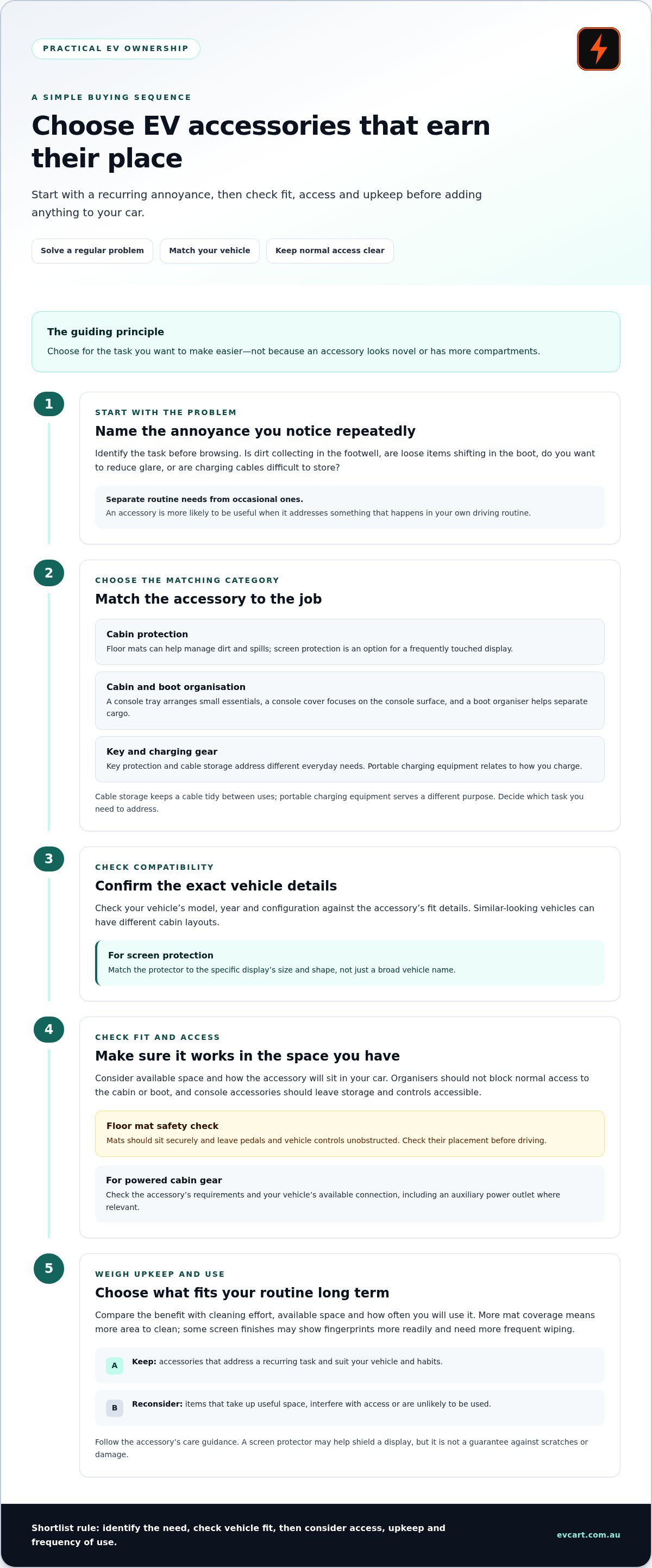
A useful shortlist starts with your routine, not a full set of matching accessories. Rank potential purchases by how often you face the problem and how much easier an accessory would make the task. Something you use every day may deserve priority over an item intended for occasional trips.
Check compatibility before you decide to buy. Fit checks should come before purchase decisions because vehicle model, year and configuration can affect whether an accessory suits your car. Don’t assume that a product designed for one EV will fit another, even if the vehicles look similar.
A practical three-step accessory shortlist
- Name the recurring need. Identify the specific inconvenience, such as loose items, cabin mess or charging equipment that needs a place during travel. Separate regular frustrations from occasional preferences.
- Check the fit. Compare the accessory’s product-specific fit information with your vehicle’s exact model, year and configuration. Consider how it sits in the car and whether it leaves normal access clear.
- Consider upkeep and use. Think about where the item will be stored, how it will be cleaned or maintained, and how often you’ll use it. A practical benefit matters most if the accessory works with your routine.
This sequence helps make trade-offs clearer. For example, a storage accessory may address clutter but use space you need for other items. A protective accessory may cover an area you use regularly, but also add a cleaning task. Weigh both sides before adding it to your shortlist.
Avoid buying accessories that create new hassles
Check that an accessory won’t obstruct visibility, controls, pedals or normal access to the cabin and boot. Consider what happens when the vehicle is carrying passengers or luggage, not just when it’s empty. If an item needs to be moved each time you use a control or load the car, it may not be a good fit for your routine.
Start with one high-priority need rather than buying a full set at once. Use the accessory for its intended task, then decide whether another category would add practical value. This keeps your choices focused and reduces the chance of filling the car with items you rarely use.
Ready to compare options against your shortlist? Browse EV accessories and focus on the categories that match your vehicle and everyday needs.
Make electric car accessories part of a more practical EV routine
The best shortlist reflects how you use your car, not a universal set of essentials. Think across four areas: cabin comfort, boot organisation, surface protection and charging storage. You may need something in one area and nothing in another. Let your regular routine guide the mix.
Build a shortlist around your own EV use
Start with the people and items that travel with you. If you regularly carry passengers, consider whether a cabin accessory would make a repeated task more comfortable or organised. For family trips, pets or outdoor activities, think about which areas need protection and whether a boot organiser would help keep the items you carry easy to find.
If you charge away from home regularly, consider how you store and carry charging equipment between uses. Cable storage may be useful if a cable often moves between the car and another location. Keep the choice grounded in your routine: occasional use may not justify giving up valuable boot space.
To rank your options, note how often a problem occurs and how much an accessory could help. Give priority to needs that come up often and affect everyday use. Put occasional conveniences lower on the list until you know they would earn their place.
Browse accessories with fit and function in mind
Begin with your vehicle’s exact model, year and configuration, then identify the problem you want to solve. Review product-specific fit details rather than assuming an accessory will suit every EV or every version of the same model. Check how it will sit in the cabin or boot and whether it leaves normal access to controls, storage and other features unobstructed.
Keep the shortlist focused. A cabin item might improve how you manage small essentials, while a boot accessory could better suit the items you carry most often. A protective option or cable storage may be more relevant if those are the frustrations you notice repeatedly. Choose for usefulness and fit, not simply to complete a set.
Once you’ve identified the category that suits your routine, browse EV accessories at EV Cart and use the vehicle and product details to narrow your options. A considered first purchase is more likely to feel useful in everyday driving than several accessories chosen at once.
Choose upgrades that earn their place in your routine
The most practical electric car accessories solve a problem you face regularly. A cabin or boot organiser, floor mats, screen protection or cable storage may suit your needs, but the right choice depends on your vehicle and how you use it.
Before buying, identify the task you want to make easier, check product-specific fit information for your model, year and configuration, then consider upkeep and available space. Start with one priority rather than trying to equip the car all at once.
Ready to compare options? Browse EV Cart accessories and focus on upgrades that fit your vehicle and everyday driving. A considered choice can help make your EV routine more organised and comfortable.
Frequently Asked Questions
What are the most useful electric car accessories?
The most useful options solve a regular problem and suit your vehicle. You might consider floor mats for cabin mess, a boot organiser for frequently carried items, a console tray for small essentials, screen protection or charging cable storage. There’s no universal must-have list. Start with the inconvenience you notice most often, then check the accessory’s vehicle compatibility and whether it will fit your routine.
Do electric cars need special accessories?
No, an electric car doesn’t need a set of special accessories. Many everyday items can be useful in different vehicles, but the car’s layout affects fit and use. You may also want a practical way to store charging equipment or organise items in the boot. Treat each accessory as an option, not a requirement, and check that it suits your vehicle without obstructing normal access or use.
How do I know if an accessory will fit my electric car?
Compare the product’s stated compatibility with your exact vehicle model and, where relevant, its year and configuration. Similar-looking cars can have different console layouts, floor areas or screen shapes, so appearance alone isn’t enough. Read the product-specific fit information before buying. If the details don’t match your vehicle, don’t assume the accessory will fit just because it suits a related model.
Are EV floor mats different from regular car mats?
The key consideration is whether the mats are designed to suit your vehicle and provide the coverage you want. Cabin layouts vary, so a generic mat may not match your car’s floor area or sit as intended. Consider your routine, such as wet footwear or frequent passengers, then check model-specific fit information. Mats should sit securely and leave pedals and vehicle controls unobstructed.
What can I use to organise EV charging cables in the boot?
A suitable storage organiser can help keep a charging cable contained and easier to locate. Choose with the cable you carry and the space in your boot in mind. Check the product details and any stated size information before buying. Store the cable so it doesn’t interfere with luggage, visibility or normal access to the boot. Your best option depends on how often you carry and use it.
Should I buy several electric car accessories at once?
No, you can start with one accessory that addresses the most frequent frustration in your routine. That might be cabin mess, limited storage or a surface you want to protect. Check compatibility before buying, then see whether the item suits your vehicle and everyday use. This keeps your choices focused and helps avoid adding clutter with accessories that don’t solve a practical problem.