
EV Console Cover: How to Choose the Right Fit and Material
2026-10-15

The best-looking EV console cover may still be the wrong choice for your car. If it doesn’t match the console’s shape or makes controls harder to reach, it can become a daily irritation instead of a useful layer.
A cover is worth considering when you want to change the feel of a high-contact surface or add a layer over part of the console. The key is to match it to your specific vehicle and routine, not just its appearance. Material, texture and care requirements also affect how it feels and fits into everyday use.
This guide explains what a console cover can and can’t do, how to assess fit and access, and what to compare when choosing a material. You’ll also find practical checks for matching a cover to your EV’s model and console layout without compromising usability. Use them to narrow your options and choose an accessory that works in your cabin, not just one that looks right in a listing.
Key Takeaways
- An EV console cover sits over part of the centre console. Decide whether you want cushioning or coverage for a high-contact surface.
- Compare canvas, neoprene and sheepskin by feel, construction and care instructions rather than assuming one material suits every cabin.
- Before choosing an EV console cover, match the listed fitment to your vehicle’s exact model and relevant variant.
- Check that the cover leaves the console lid, storage areas and controls accessible for everyday use.
- Follow the care guidance for the specific cover, and check it before using water, cleaners or a washing method.
Table of Contents
- What an EV console cover does, and what it does not do
- EV console cover materials: compare the practical trade-offs
- EV console cover versus an uncovered console: assess fit and usability
- How to choose an EV console cover for your vehicle and routine
- Care for an EV console cover and make your next move
What an EV console cover does, and what it does not do
A console cover sits over part of the centre console, adding a separate surface to an area you touch or rest against while driving. Depending on its shape and material, it may provide a softer place to rest an arm or cover a section that gets frequent contact. It only covers the area it is designed for, not the whole cabin.
Think of it as a surface accessory, not a fix for every sign of wear. A cover may reduce direct contact with the original console surface, but it can’t guarantee protection from scratches, spills or damage. The result depends on the fit, how the cover is used and the conditions inside the vehicle.
Comfort is personal. One driver may prefer a softer surface on a longer trip; another may like the original console’s feel and finish. Console shape and layout matter too. If the area is rarely touched, or an added layer would feel awkward, a cover may not suit your routine.
Material can influence that experience. Textiles used in vehicle interiors include materials for seats, carpets and other trim, as outlined in Automotive Textile Materials. That’s useful background, but it doesn’t explain how a particular cover will feel or perform. Check the individual cover’s construction and care guidance before deciding.
When a console cover may suit everyday driving
Consider where your arm rests, which parts of the console you touch often, and whether the existing surface feels comfortable. A cover may suit you if you want a softer contact point or a separate layer over a frequently touched area. It may be less useful if it shifts, feels bulky or changes how you use the console. Judge the likely benefit against your own layout and habits, not a promise of guaranteed protection.
Console cover or console tray: understand the difference
A cover changes the surface; it doesn’t create a compartment or add storage like a console tray can. A console cover provides a surface layer, while a console tray creates a place to organise small items. If organisation is your main goal, use the EV console tray fit guide to consider that separate accessory. For a direct comparison of their roles, refer to console tray versus console cover. Whichever option you consider, keep the console’s normal functions accessible.
EV console cover materials: compare the practical trade-offs
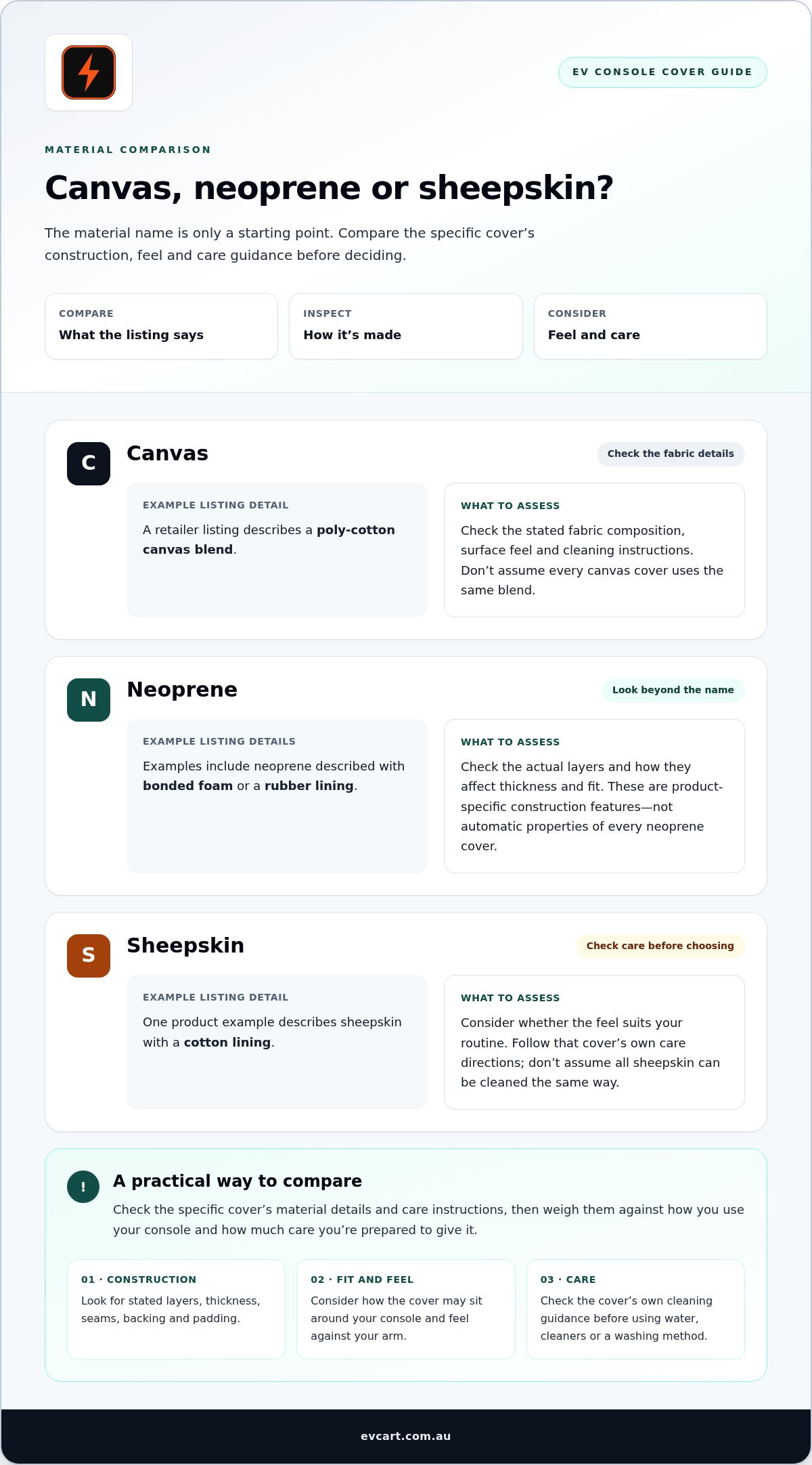
Material labels are a starting point, not a complete product description. Covers made from the same named material can differ in layers, lining, padding and care requirements. Compare the construction and cleaning guidance for the specific cover, then weigh those details against how you use your car.
| Material example | What product descriptions may tell you | What to assess |
|---|---|---|
| Canvas | A retailer listing describes a poly-cotton canvas blend. | Check the stated fabric composition, surface feel and cleaning instructions. Don’t assume every canvas cover uses the same blend. |
| Neoprene | Examples include neoprene described with bonded foam or a rubber lining. | Look for the actual layer details and how they affect thickness and fit. These are product-specific construction features, not automatic properties of every neoprene cover. |
| Sheepskin | A product example describes sheepskin with a cotton lining. | Consider whether the feel suits your routine, then follow that cover’s own care directions rather than assuming all sheepskin can be cleaned the same way. |
Choose a material based on how you use the console and how much care you’re prepared to give the cover. A soft surface may appeal if your arm rests there often. Another construction may better suit your preferences, but the material name alone won’t tell you how the cover will feel once fitted or how easily it will fit your cleaning routine.
Canvas and neoprene: compare construction before choosing
Product descriptions show why it pays to read beyond the material name: canvas may be described as a poly-cotton blend, while neoprene listings may specify bonded foam or a rubber lining. Those details apply to the individual products. Check thickness, seams, backing and any stated padding rather than assuming all canvas or neoprene covers have the same construction.
For an EV console cover, fit and construction work together. A thicker or layered design may feel different against your arm and sit differently around console edges than a simpler surface. Treat those as details to inspect in the product information, not guaranteed benefits of a material. Match the description to the shape and use of your console.
Sheepskin and other soft surfaces: weigh comfort against care
Sheepskin is one example of a soft-cover option. Product listings may specify features such as a cotton lining or particular cleaning directions, but don’t assume those details apply to another cover. If you prefer a soft surface, check the care instructions before buying and consider whether they suit your regular cleaning habits.
If a cover needs a cleaning method you’re unlikely to use, that mismatch may outweigh its feel. Check the stated instructions before applying water, household cleaners or a washing method. For a practical comparison, browse the EV accessories range and assess each listing using its own material and care details.
EV console cover versus an uncovered console: assess fit and usability
An uncovered console keeps the original surface and contours as designed. You can see the joins and reach the lid, buttons and storage without an extra layer. A cover changes the contact surface and may suit your comfort or interior preferences, but it adds material around areas you use. The trade-off depends on the console’s shape and how you interact with it.
Fit isn’t universal. Console designs vary between vehicles and may differ by model or variant, so don’t assume a cover that looks similar will sit correctly. Check the product’s stated fitment against your exact vehicle details and compare its shape with the console itself.
Check console access before settling on a cover
Identify the parts you need to use: the lid, buttons, storage openings, hinges and any moving sections. Compare them with the cover’s outline and stated fitment. Pay particular attention to edges that could cross a join or stop the lid opening fully. A suitable fit should leave normal access clear.
Use this practical check while the vehicle is parked:
- Open and close the console lid without the cover catching or shifting.
- Reach each button and storage opening as you normally would.
- Check the edges and seams where the driver or passenger rests an arm.
- Notice whether the cover moves, bunches or creates an uncomfortable ridge.
Weigh the trade-offs for your cabin
A covered surface may feel more comfortable or provide a layer between hands and the original finish. It can also add an edge or seam where your arm rests, and it won’t suit every driving posture. Consider how often you and your passengers lean on the console and whether you regularly open its storage. These everyday actions matter more than appearance alone.
Before choosing an EV console cover, picture a typical trip. Does the driver rest an arm near the covered area? Does a passenger use the console, or could the extra layer change their reach? Check the access points from both front seats. A cover that sits neatly for the driver may still feel awkward for a passenger.
If storage is your main concern, a cover won’t create a compartment or organise small items. An electric car centre console organiser serves a different purpose, so decide whether you need a surface change or a place for belongings. Don’t rely on a broad “universal fit” description alone. Use the listed vehicle fitment and relevant variant to judge suitability.
Keep the original console uncovered if you prefer direct access and its existing feel. Choose a cover only if its fit leaves the lid, storage and controls usable, and its edges feel comfortable in your cabin. If it compromises an everyday movement, it isn’t right for your routine.
How to choose an EV console cover for your vehicle and routine
Use a simple sequence to narrow your options: identify the console, define what you need, compare material and construction, then assess usability. Treat vehicle fit and access as must-haves. Feel, colour and style are preferences to consider once the practical checks are satisfied.
Start with the vehicle and the reason for buying
Write down your vehicle’s exact model and relevant variant, then note the console layout. Decide whether your priority is a softer surface, a layer over a frequently touched area or another specific need. Don’t assume a cover listed for one trim will suit another, even within the same model range.
Be precise about the area you want covered. A preference for arm comfort may call for a different shape or coverage area than a desire to cover a high-contact section. If you can’t identify a clear use, pause before comparing finishes. A defined need makes it easier to judge whether a product description matches your cabin and routine.
Compare fit, material and care information
Read the product description for the named vehicle fitment, relevant variant and construction details. Compare the stated material and care instructions with your preferences and the time you’re willing to spend maintaining the cover. Don’t rely on a material label alone. Details such as lining or padding apply only when the specific product description states them.
- Identify the console. Record the vehicle model, variant and console configuration so you can compare them with the stated fitment.
- Define the need. Decide whether you want a softer contact surface, coverage for a particular area or another practical change.
- Compare the material. Use the product’s own construction and care details to assess feel and upkeep.
- Check usability. Consider whether the cover’s shape suits the console and leaves its everyday functions accessible.
Separate deal-breakers from nice-to-haves. Correct fitment and a suitable shape come first. Material feel, appearance and care requirements can help you choose between options that meet those basics. If you’re comparing a console tray as a separate accessory, use the EV console tray fit guide for tray-related questions, not as evidence of cover compatibility.
Before buying, read the fitment and care information together. A cover that matches your material preference still needs to fit your vehicle, and a suitable fit won’t make sense if its upkeep doesn’t suit your habits. This keeps your decision tied to your actual console rather than a general product description.
Once you know your vehicle details and priorities, browse EV accessories at EV Cart Australia and use those criteria to guide your selection.
Care for an EV console cover and make your next move
Care starts with the instructions for the specific cover. Material labels alone don’t tell you whether a product can be wiped, washed or cleaned with a particular solution. Follow the supplied guidance, and don’t assume directions for one cover apply to another.
Keep care advice specific to the cover
Before cleaning, check the product instructions for the recommended method and any limits. This matters if you’re considering water, a household cleaner or a washing method. For example, don’t apply care directions for a sheepskin cover to canvas, neoprene or another material unless that product’s instructions say to.
Keep the guidance accessible for later. If the cover needs attention after a spill or regular use, you’ll have the correct instructions to hand rather than relying on a general material tip. Don’t assume a material is stain-resistant or water-resistant, or that a particular cleaning method will preserve its condition over time. Those outcomes depend on the specific product and how it’s used.
Removal and refitting should also follow the product’s directions. Some covers may need to be removed for cleaning; others may have different instructions. Don’t pull or stretch the cover to take it off unless the guidance allows it. After refitting, check that it sits as intended and the console’s normal access points remain clear.
- Read the care instructions before applying water or cleaner.
- Use only the cleaning method stated for that particular cover.
- Remove and refit the cover only as its instructions allow.
- After refitting, check its position and console access.
Find a suitable EV accessory
Make the final decision against four points: vehicle fit, console access, material preference and care requirements. Fit and access are practical essentials; feel and appearance are preferences. If the essentials don’t suit your vehicle and routine, keep comparing rather than choosing on appearance alone.
Think about your actual habits. If you prefer a low-effort cleaning routine, choose a cover whose stated care instructions suit the time and methods you’re comfortable with. If storage and organisation are the issue, consider a tray as a separate accessory. The EV console tray fit guide is relevant to tray fit, not proof that a cover will fit your console.
A considered choice should match your vehicle, leave the console usable and suit your preferences for feel and upkeep. Explore EV accessories at EV Cart to find an option for your EV and everyday routine.
Make your next accessory choice with confidence
Your cabin should work for the way you actually drive, not for an idealised version of your routine. Before choosing an EV console cover, picture an ordinary day: where you reach, what you lean on and how much upkeep you want to take on. That reality check can help you avoid an accessory that looks right but feels out of place once it’s in the car.
You don’t need to change a console that already suits you. If you want to adjust its feel or finish, choose deliberately and let everyday usability guide the decision. The right accessory is one that makes sense in your vehicle without adding friction to the way you use it.
Explore EV accessories at EV Cart and choose an option that suits your routine.
Frequently Asked Questions
Can an EV console cover damage the original console?
Yes, a poorly suited cover could cause issues, particularly if it shifts, presses against a moving part or traps grit beneath it. Before fitting, check the product instructions and make sure the cover sits without forcing it over edges or joins. If you notice rubbing, movement or marks, remove it as directed and inspect the contact area. A cover can’t guarantee that the original surface will remain mark-free.
Are console covers suitable for leased electric cars?
They may suit a leased car if the cover attaches without making a permanent change, but check the attachment method and your lease terms first. Don’t assume adhesive or another fixing method can be removed without affecting the console. Follow the cover’s fitting and removal instructions, and take care of the original interior. A removable accessory doesn’t replace your responsibilities under the lease agreement.
Can I use a console cover if my EV has wireless charging?
Possibly, provided the cover doesn’t obstruct the charging area you use. Check your vehicle’s layout and guidance, then compare that area with the cover’s stated fitment and shape. For example, if the charging pad sits close to the armrest, make sure the cover doesn’t overlap it. Don’t assume charging will work through an added layer; keep the surface clear as your vehicle instructions require.
Do console covers fit every electric car?
No. Console shapes, lids and access points vary between vehicles, and fitment may depend on the model or configuration. Match the product’s stated fit to your exact vehicle rather than relying on a general description or a similar-looking cabin. The same model name can cover different variants, so read the fitment details carefully before choosing an EV console cover.
Can I use a console cover with a console tray?
Sometimes, but the two accessories need to sit together without blocking one another. A tray placed beneath or beside a cover could affect how either item sits, so consider their positions in your actual console layout. Keep the lid and any controls accessible. If you’re deciding which accessory better suits your needs, compare the distinct roles of console trays and covers before combining them.
What should I check before cleaning an EV console cover?
Check the care instructions for the exact cover before using water, a cleaner or any washing method. For instance, don’t assume a product can go in a washing machine just because another cover’s instructions allow it. Confirm whether removable parts have separate care directions, and follow the stated method for taking them off and refitting them. If the guidance calls for spot cleaning, don’t substitute a different method.