
Matte vs Clear Screen Protector for Cars: Which Finish Suits Your Display?
2026-10-18

The finish that cuts glare can also soften the look of your display. That’s the central trade-off when choosing a matte vs clear screen protector car owners can live with day after day.
If bright sunlight makes your screen hard to read, a matte surface may help diffuse reflections and make fingerprints less noticeable. Prefer crisp colour and fine detail? A clear finish keeps the display closer to its original appearance, but reflections and smudges may stand out more. Neither option is automatically better. Your driving conditions, screen position and priorities matter.
This guide compares glare, image clarity, fingerprints and everyday touch use, then explains what to check before buying. Start by matching the protector to your vehicle’s specific display. A finish alone doesn’t determine touch response or fit, so check the product details and follow the application instructions too.
Key Takeaways
- Matte and clear finishes have different trade-offs. Choose according to your screen priorities rather than assuming one is best.
- The matte vs clear screen protector car decision comes down to how you weigh reflection management against a crisp, unobtrusive appearance.
- Consider bright-light exposure, screen angle and how much visible fingerprinting bothers you before choosing a finish.
- Compare glare, perceived clarity, marks and touch feel separately. The protector and the screen both affect what you notice.
- Before buying, match the protector to your vehicle’s display and check its coverage and application instructions.
Table of Contents
- Matte vs clear car screen protector: what changes between the finishes?
- How matte and clear finishes affect glare, screen clarity and daily use
- Matte vs clear screen protector for cars: compare the trade-offs
- How to choose a car screen protector finish for your driving habits
- Choose and care for a screen protector that suits your car
Matte vs clear car screen protector: what changes between the finishes?
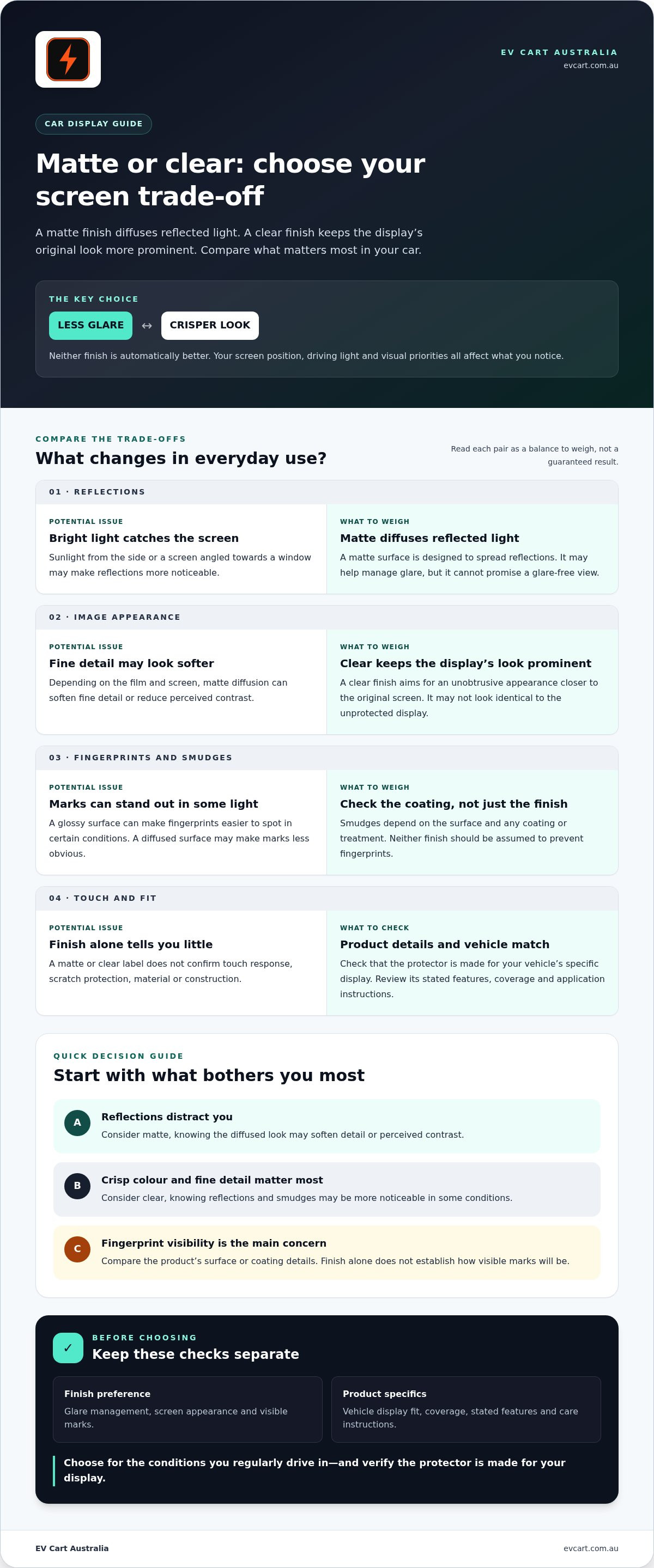
Both finishes involve a compromise, so neither is right for every driver. A clear protector aims to keep the display’s original look prominent, while a matte surface is designed to diffuse reflected light. The result depends on the protector and the screen beneath it.
A clear finish prioritises an unobtrusive appearance, while a matte finish diffuses reflected light to help manage reflections. This distinction is a useful starting point, not a guarantee of how a particular product will look in your car. Material, coatings and screen characteristics all affect the result.
A matte vs clear screen protector car comparison should look beyond the finish name. Consider reflected light, perceived colour and contrast, visible marks, touch use and the overall appearance of the display. The screen’s angle and the light entering the cabin can change what you notice, so the same finish may look different across vehicles and driving conditions.
Screen protectors also vary by material and construction. A general overview of types of screen protectors explains their protective purpose and common material categories, but a finish name alone doesn’t tell you a protector’s material or performance. Keep those details separate when comparing options: first decide which visual trade-off suits you, then assess the product’s details and vehicle fit.
What does a clear car screen protector look like?
A clear finish is intended to sit quietly over the display rather than add a visibly frosted surface. It may preserve a look closer to the unprotected screen, but don’t assume the result will be identical. The protector can affect how colour, contrast and fine detail appear, and drivers differ in how much they notice those changes.
What does a matte car screen protector change?
A matte protector has a diffused surface designed to spread reflected light rather than show a sharp reflection. Depending on the product, it may look lightly textured or less glossy than a clear protector. Matte films don’t all perform or appear the same, so weigh reflection management against the screen finish you prefer for maps, menus and other display content.
Think about what you notice first when using the display. If reflections distract you, a diffused surface may be worth considering. If you value a smooth, less noticeable layer and the screen’s original visual character, a clear finish may be a closer match. Neither description replaces product-specific details: compare the stated features, then check that the protector is made for your vehicle’s display before buying.
How matte and clear finishes affect glare, screen clarity and daily use
Assess screen appearance, reflected light and visible marks separately. A finish can change how light reflects without producing the screen appearance you prefer. Likewise, a surface that makes smudges less noticeable doesn’t necessarily prevent them. The practical balance depends on the protector, the display and how you use the screen.
Light and position matter. Sunlight entering from the side may reflect differently from bright sky above, while a screen tilted towards a window may catch more reflections than one set deeper into the dashboard. The display’s own brightness and contrast also affect what stands out. Think about the conditions you regularly drive in rather than relying on a finish label alone.
Does matte reduce reflections without changing the display?
A matte surface is intended to diffuse reflected light, but it can’t promise a glare-free view. That diffusion may also make fine detail look softer or reduce perceived contrast, depending on the film and screen. Consider whether managing reflections matters more to you than a crisp, glossy-looking display, especially when reading small text or viewing detailed maps.
Do either of the finishes show fingerprints more clearly?
Fingerprints and smudges depend on the surface and any coating or treatment, not just whether the finish is matte or clear. Marks may be less obvious on some diffused surfaces, while a glossy surface can make them easier to spot in certain light. Neither finish should be assumed to prevent fingerprints. Follow the specific protector’s cleaning instructions to avoid unsuitable materials or methods.
Finish alone doesn’t establish every protector’s performance. Treat it as one comparison point, then look for product-specific information about touch response, cleaning and scratch protection. These qualities can depend on material, construction and any stated surface treatment. A finish name by itself doesn’t confirm how responsive a screen will feel or how well a protector will withstand everyday contact.
Display technology continues to develop, as the Society for Information Display’s coverage of advancements in display technology illustrates. A vehicle’s display and a protector are separate parts of the viewing experience, though. A new or high-resolution screen doesn’t guarantee that every film will preserve its appearance equally. Assess the specific protector rather than assuming a finish will behave identically across cars.
- Reflections: Consider how cabin light reaches your screen at different times and angles.
- Appearance: Decide whether you prefer a glossy, crisp look or a diffused surface.
- Visible marks: Look for stated coating details instead of assuming the finish prevents smudges.
- Daily handling: Use product information to assess touch response, care and scratch-protection claims.
For the matte vs clear screen protector car decision, give priority to what you notice most during regular screen use. When comparing options, browse EV accessories and consider vehicle-specific fit alongside the finish.
Matte vs clear screen protector for cars: compare the trade-offs
Use the comparison below to weigh each finish against your priorities. These are general tendencies, not fixed outcomes: a particular film, coating and vehicle display can change what you see and feel. For the matte vs clear screen protector car decision, assess each feature on its own rather than assuming one finish wins across the board.
| Factor | Matte finish | Clear finish | Product detail to verify |
|---|---|---|---|
| Glare | May diffuse reflected light and make reflections less distracting. | May show sharper reflections in bright conditions. | Look for a stated anti-glare property. Don’t assume either finish removes reflections. |
| Perceived clarity | Diffusion may soften fine detail or affect perceived contrast. | Aims for a less noticeable layer, though the result varies. | Check claims about transparency or image appearance for the specific protector. |
| Visible marks | Some surfaces may make smudges less obvious. | Fingerprints may stand out more on a glossy surface. | Look for a stated fingerprint-resistant coating or treatment. |
| Touch use | Surface texture may feel different under a finger. | May feel smoother, depending on its material and coating. | Check product information for touch-response claims rather than inferring them from the finish. |
| Screen appearance | Creates a less glossy, potentially more diffused look. | Prioritises a clear, unobtrusive appearance. | Review the specific finish and display compatibility before purchase. |
When might a matte finish suit your priorities?
Consider matte if reflected light regularly distracts you and managing it matters more than a glossy screen appearance. For example, if you often notice reflections across the display, a diffusing finish may better match that priority. Balance the potential benefit against the possibility that the image may look less crisp or contrasty. The result depends on the specific film and screen.
When might a clear finish suit your priorities?
A clear finish may suit you if you want the protector to be less noticeable and prefer the display’s original glossy look. It doesn’t automatically make viewing reflection-free, particularly when bright light catches the screen. Nor does “clear” guarantee unchanged colour, image quality or touch response. Use product-specific information to assess those qualities, then compare them with what you value most.
Let your usual conditions guide the choice. A driver who prioritises reflection management may favour matte, while someone who puts screen appearance first may lean towards clear. If both matter, decide which trade-off you’re more willing to accept. Then check vehicle and display fit separately: a preferred finish won’t make a protector suitable for a screen it wasn’t designed to cover.
How to choose a car screen protector finish for your driving habits
Start with the issue you most want to solve. A clear sense of your priorities makes the matte vs clear screen protector car decision easier, even if no finish delivers every benefit at once. Use this process to consider your typical screen use, then assess product details and vehicle fit separately.
- Name your main priority. Decide whether you most want to manage reflections, keep the display looking close to its original appearance, or make fingerprints less noticeable. If one factor matters far more than the others, use it to guide your finish choice.
- Think about your actual light conditions. Recall when reflections interfere with reading the display. Consider where light comes from, the screen’s position and when you drive. Another driver’s cabin or route may create a different experience.
- Set your screen-appearance preference. Ask whether a potentially diffused look would bother you, or whether reflections are the bigger distraction. A matte finish may help manage reflected light, while a clear finish aims for a less noticeable appearance. The specific result depends on the protector.
- Assess visible marks and product claims. Consider how often fingerprints catch your eye, but don’t assume a finish prevents them. Look for product-specific information about any stated coating, touch response or care instructions rather than treating those qualities as automatic benefits of matte or clear.
Match the finish to your most common driving conditions
Focus on the situations you regularly encounter, not a general idea of driving conditions. A screen may catch reflections in one cabin or at one angle but remain easy to read in another. If reflected light is your chief concern, matte may be worth considering, while keeping its possible effect on screen appearance in mind. If a less noticeable layer matters more, clear may suit your preference, though it won’t guarantee reflection-free viewing.
Check vehicle fit separately from finish
Once you’ve chosen a preferred finish, match the protector to your vehicle and display using the current product details. Model compatibility and screen coverage aren’t determined by whether the surface is matte or clear. Keep finish preference, product claims and fitment as separate checks. For further guidance, compare those details with the listing for the specific protector.
Make the final choice by ranking your priorities: the viewing conditions you encounter most, the display look you prefer and how much visible marking bothers you. Then check that the product details suit your vehicle’s screen before buying. Explore EV accessories at EV Cart Australia as you narrow down a practical match for your car.
Choose and care for a screen protector that suits your car
Make the finish decision around the trade-off you’re most comfortable with. If managing reflected light is your priority, matte may suit you. If you prefer a less noticeable layer and glossy screen appearance, clear may be a better match. Neither choice settles whether the protector fits your vehicle or how it performs in daily use.
Keep those checks separate. The matte vs clear screen protector car choice is about your preferred viewing experience; vehicle compatibility, screen coverage and application are product-specific. Check the current product details before buying, then follow the supplied instructions for fitting, cleaning and removal. Don’t assume every protector uses the same process or leaves no residue when removed.
What to check before choosing a protector
Start with your vehicle’s exact model and the screen the protector is intended to cover. A display that looks similar isn’t enough to establish compatibility. Review the product information for its stated fit and coverage, then confirm the finish matches your preference. Also read any specific performance claims and care directions rather than treating them as standard features of matte or clear protectors.
A quick pre-purchase check can keep the decision orderly:
- Match the protector’s stated vehicle and screen compatibility to your car.
- Check the finish and screen coverage described in the product details.
- Read the application instructions before starting, including any preparation steps.
- Keep the product’s cleaning and removal guidance for later reference.
This separates three questions: does it fit, does the finish suit your viewing priorities, and can you follow the application and care instructions? Use the product information to answer each one before buying.
How to care for the screen and protector
Use only the cleaning method and materials specified for your particular protector. Instructions can differ, so don’t assume a household cleaner, cloth or tool is suitable. If you need to remove the protector, follow its removal guidance rather than levering it with an improvised tool or expecting it to come away without residue. Product-specific steps help you avoid guesswork.
Keep the care instructions accessible after application. General care reminders can be useful, but let the product’s own directions take priority where they specify a method or material. Good care starts with using the right instructions for the item fitted to your display.
Choose matte if reflection management matters most, or clear if you prioritise a less noticeable finish. Then verify fit and follow the product’s application and care directions.
Make your next screen-protector choice with confidence
Before you buy, decide what you want your display to look like in everyday use. The matte vs clear screen protector car choice is easier when you can name your main priority rather than trying to find a finish that does everything. Keep that preference in mind as you compare product details.
A screen protector becomes part of the display you use throughout your drive. A considered choice can help you feel more comfortable with the screen’s look and feel, without relying on broad claims about what a finish will do. Compare options for your vehicle and weigh their stated features against your priorities.
Once you know what matters most, check compatibility, coverage and care instructions before choosing. The right finish is the one that suits your display and the trade-offs you’re comfortable with.
Frequently Asked Questions
Is a matte screen protector better for driving in bright sunlight?
It may help manage reflections by diffusing light, but it won’t guarantee a reflection-free screen. The result depends on sunlight direction, dashboard layout and screen angle. If glare is most distracting at a particular time of day or on a regular route, consider that situation when choosing. A matte finish may suit your priority, but check the product details and decide whether its viewing appearance is right for you.
Can a matte screen protector make a car display look less clear?
Yes, a matte surface may make fine details appear softer or affect perceived contrast. You might notice this most on small map labels or thin text, while another driver may focus more on reduced reflections. The effect varies by protector and display. If sharp detail matters to you, review the product’s appearance claims and weigh them against your tolerance for reflections before buying.
Does a clear screen protector stop reflections on a car screen?
No, a clear finish doesn’t by itself stop reflections. Its purpose is to keep the protector less noticeable, not to promise anti-reflective performance. A clear layer can still reflect a bright patch of sky or sunlight entering through a side window. Look for explicit product information about reflection management rather than assuming a clear finish has that feature.
Can a screen protector affect touchscreen responsiveness?
It can, depending on the protector’s construction, fit and application. A protector that isn’t suited to the display, or has dust or bubbles beneath it, may interfere with a smooth touch experience. Check product-specific compatibility and touch-response information before purchase. After application, test ordinary taps and swipes while the car is parked, and follow the supplied guidance if inputs don’t register as expected.
Will a screen protector hide scratches already on my car display?
Don’t rely on a protector to conceal existing scratches. Marks may remain visible through it, and their appearance can vary with the display, lighting and protector surface. Check the screen’s condition before applying anything, especially if a mark is deep or the surface is damaged. Review the product’s application instructions and don’t treat a protector as a repair for screen damage.
Can I reuse a car screen protector after removing it?
Reuse depends on the specific protector and its removal instructions, so don’t assume it can be reapplied. After removal, dust or fingerprints on the adhesive side can affect alignment and contact with the screen. Some products may be intended for one application only. Check the product guidance before removing it, and avoid touching or cleaning the adhesive unless the instructions allow it.
How do I clean a matte or clear car screen protector?
Follow the cleaning instructions supplied for that protector. Park the car before cleaning so you can work without distraction, then use only the materials and method the product specifies. Don’t assume a household glass cleaner, abrasive cloth or direct spray is suitable; an incompatible cleaner may affect a surface treatment. If instructions aren’t available, avoid experimenting with chemicals or tools.