
Rubber vs Carpet Car Mats: Which Option Suits Your Driving?
2026-10-09

The toughest-looking mat isn’t automatically the best choice for your car. The rubber vs carpet car mats decision depends on what your cabin faces day to day, from beach sand and dust to wet shoes and muddy footwells.
If you’re weighing easy clean-up against a softer, more finished feel, both options have practical advantages. Rubber-style mats are generally simple to wipe or rinse, while carpet can feel more comfortable underfoot and blend neatly with the interior. The right choice comes down to your driving routine, passengers and willingness to clean and maintain the mats.
This guide compares comfort, dirt and moisture protection, cleaning and everyday use, including where TPE fits as an alternative material. You’ll also learn what to check for vehicle-specific fit and secure placement. A well-fitted mat should stay flat and clear of the accelerator, brake and clutch pedals, so material is only part of the decision.
Key Takeaways
- Choose rubber vs carpet car mats by weighing the mess your footwell usually gets against the comfort and appearance you want.
- Consider how often spills, loose dirt or damp gear reach the floor, and how much cleaning you’re prepared to do.
- Use your vehicle’s make and model details to assess whether a mat’s stated fit is suitable.
- Check that mats lie flat and stay in place without obstructing the pedals.
- Compare material, care needs and cabin style rather than treating one option as best for every driver.
Table of Contents
- Rubber vs carpet car mats: what changes in everyday use?
- Rubber vs carpet car mats: how do they compare on comfort, mess and care?
- Which car mats suit your driving routine and Australian conditions?
- How to choose car mats without overlooking fit and safe placement
- Make your rubber or carpet car mat decision with confidence
Rubber vs carpet car mats: what changes in everyday use?
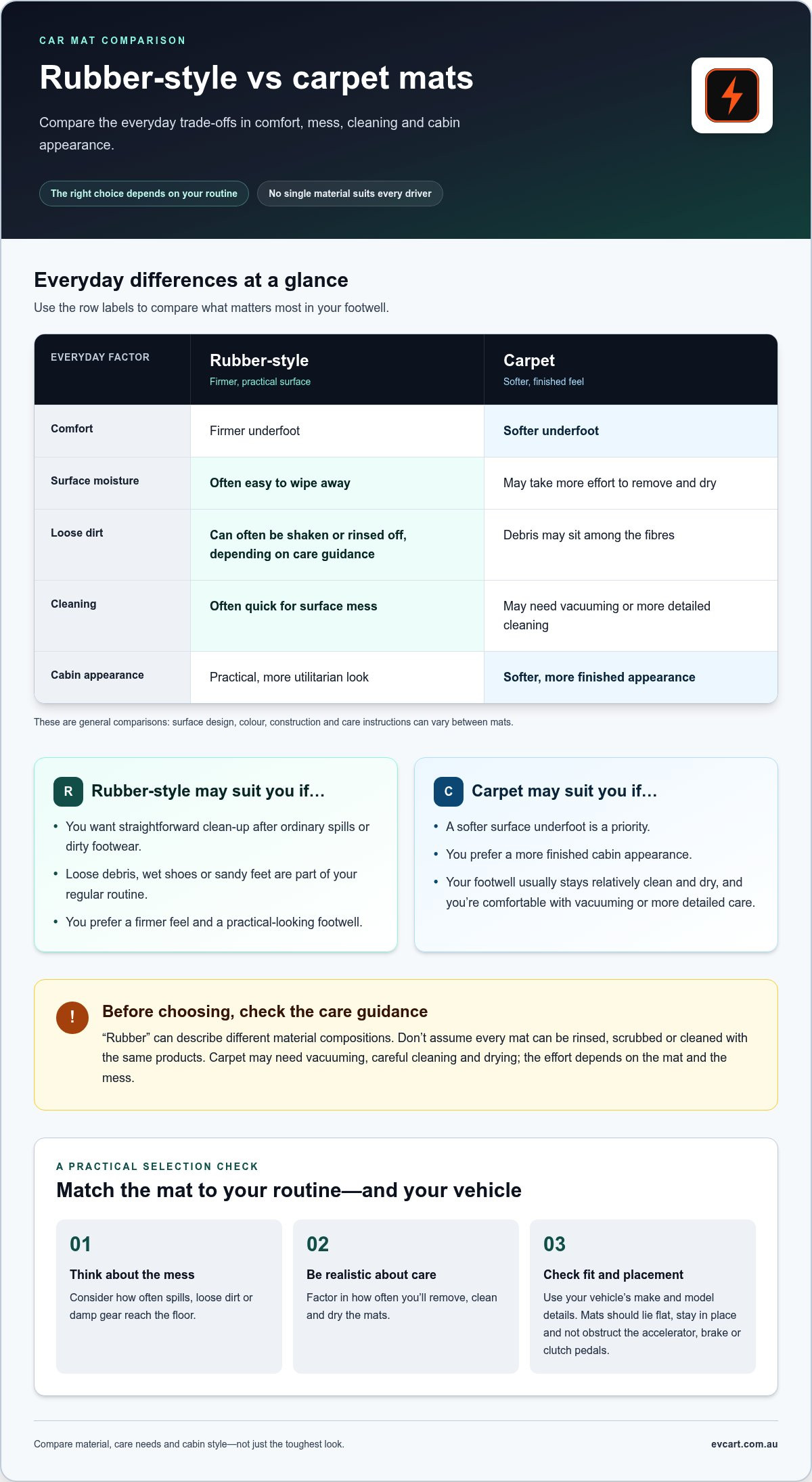
Rubber-style mats tend to make surface mess easier to remove, while carpet mats offer a softer, more finished cabin feel. That’s the central difference in rubber vs carpet car mats, but the better fit depends on the mess you deal with and the interior you prefer.
Neither material is automatically best for every driver or vehicle. Surface design, colour and care instructions all affect how a mat handles day-to-day use, so treat the comparison as a guide rather than a promise about every product. The general Vehicle mat overview also describes common mat types and their role in a car interior.
| Everyday factor | Rubber-style mats | Carpet mats |
|---|---|---|
| Comfort | Firmer underfoot | Softer feel |
| Moisture | Surface moisture is often easy to wipe away | Dampness may take more effort to remove |
| Dirt | Loose debris can be shaken or rinsed off, depending on care guidance | Debris may sit among the fibres |
| Cleaning | Often quick for surface mess | May need vacuuming or more detailed cleaning |
| Appearance | Practical, with a more utilitarian look | A softer, more finished cabin appearance |
What do rubber car mats offer day to day?
A wipe-clean surface can simplify clean-up after ordinary spills or dirty footwear. Where the care instructions allow, lift the mat out, remove loose debris and wipe or rinse it. Surface patterns and construction differ, so dirt can collect in textured areas instead of coming away with one quick wipe.
The firmer feel and practical appearance suit some cabins better than others. They’re not universal drawbacks: the way a mat looks and feels depends on personal preference and how it sits within the vehicle’s interior.
Also, “rubber” can describe products with different material compositions. Don’t assume every mat can be rinsed, scrubbed or exposed to the same cleaning products. Follow the specific care instructions to avoid damaging the surface.
What do carpet car mats offer day to day?
Carpet provides a softer surface underfoot and can make the cabin feel more finished. Drivers who prioritise interior appearance or a less utilitarian feel may prefer it, particularly if the footwell usually stays relatively clean and dry.
The trade-off is that dirt can become caught among the fibres rather than sitting on a smooth surface. Vacuuming may handle loose debris, while dampness or a spill can call for more careful cleaning and drying. The time and effort depend on the mat and the type of mess.
Consider how often you’re prepared to clean the mats, not just how they look when new. Carpet may suit a tidy routine, while frequent exposure to grime can make upkeep more involved.
In practical terms, rubber-style mats favour straightforward surface clean-up, while carpet mats favour a softer cabin feel. Compare those priorities with the care guidance for the specific mat before deciding.
Rubber vs carpet car mats: how do they compare on comfort, mess and care?
The day-to-day difference often comes down to how frequently the footwell gets dirty and how much time you want to spend cleaning it. An occasional coffee spill is a different challenge from repeated trips with wet shoes, sandy feet or muddy gear. Consider your regular pattern, not just the worst mess you can imagine.
Use these factors to weigh the trade-offs:
- Comfort: Carpet usually feels softer underfoot; rubber-style surfaces feel firmer.
- Dirt visibility: Light dust, sand or marks may stand out differently depending on the mat’s colour and texture.
- Moisture: A smooth surface can make surface water easier to remove, while carpet may need more time and care to dry.
- Cleaning effort: A quick wipe may suit occasional mess, but recurring debris can mean regular mat removal and more thorough cleaning.
- Appearance: Carpet can give the cabin a softer finish; rubber-style mats can look more practical. The result depends on the vehicle and your preference.
Frequency matters. If you rarely carry wet or dirty items, you may be comfortable cleaning either material occasionally. If mess arrives most days, think about whether you’ll remove the mats, clear debris and let them dry as part of your routine.
Which car mat material is easier to keep clean?
For a small spill or loose surface dirt, wiping a rubber-style mat may be a straightforward first step. Rinsing may suit some mats, but don’t assume every material or finish can be treated the same way. Carpet can be vacuumed to remove loose debris; dirt worked into the fibres may take more effort to remove, especially if you leave it until a full clean.
Think through a normal week. A driver who tracks in sand after a beach visit may need to lift out either type and clear the footwell. Regular muddy shoes or damp clothing can make frequent cleaning and drying more important. Neither material guarantees protection from stains or odours. Follow the care instructions supplied with your mats. The Carpet and Rug Institute offers general carpet-care information, though vehicle-mat instructions should guide care for your particular product.
Which material feels and looks better inside the car?
Carpet tends to provide a softer foot feel, while rubber-style mats offer a firmer, more utilitarian surface. Neither preference guarantees a particular level of comfort: consider what you notice during everyday driving and how the mat’s texture feels beneath your footwear.
Colour and texture also shape the cabin’s appearance. A mat that coordinates with the interior can make the footwell feel more integrated, while a contrasting or visibly practical surface may suit your priorities. Check how its colour looks alongside the vehicle’s existing trim, and consider whether you’re comfortable with dirt being more visible between cleans.
Prioritise rubber-style mats if simple surface clean-up matters most; lean towards carpet if a softer feel and finished appearance matter more. EV owners comparing useful additions for everyday driving can also explore EV accessories as part of their vehicle-specific research.
Which car mats suit your driving routine and Australian conditions?
Start with the mess your car actually gets, not a broad label such as “coastal” or “country”. Australian drivers can encounter beach sand, loose dust, damp shoes or muddy gear in many different settings. Your regular routes, passengers and activities matter more than assuming one material suits a particular climate or vehicle type.
Think through an ordinary week. Notice what gets carried into the footwell, how often it happens and whether you usually clean it straight away. A single sandy outing followed by a quick tidy is different from grit arriving every day with work boots, sports gear or family trips.
- Wet footwear: Consider how regularly shoes bring in water, and whether you can remove and dry the mats as part of your routine.
- Loose dirt or sand: Think about how often debris accumulates and whether you’re willing to lift the mats to clear it out.
- Family use: Account for passengers, snacks, school bags and changing footwear. More activity can mean more frequent cleaning.
- Cabin feel: Decide whether an easier-to-manage surface or a softer interior matters more on your usual drives.
This simple check makes the rubber vs carpet car mats decision more relevant to your own use. Don’t base it on an unusual trip alone. If you occasionally carry camping gear but mostly drive to work with clean, dry shoes, your everyday pattern may matter more than that one outing.
When might rubber car mats suit your routine?
Rubber-style mats may suit drivers who often bring in moisture, grit or outdoor debris and want to deal with surface mess promptly. For example, if you regularly move between work, outdoor activities and the car, a surface that can be wiped may fit a frequent clean-up routine. Check its care instructions before rinsing or using any cleaning product.
Balance convenience against feel and appearance. If you value a softer cabin or a more coordinated interior, the practical surface may not be your preferred choice. A material’s usefulness depends on both the mess it faces and whether you’re happy living with it day to day.
When might carpet car mats suit your routine?
Carpet may suit drivers who prioritise a softer foot feel and a cabin appearance that complements the vehicle’s interior. It can be a comfortable choice for cleaner, more controlled daily use, particularly if passengers usually enter with dry footwear and the footwell stays relatively tidy.
Be realistic about upkeep. Loose dust or crumbs may call for regular vacuuming, and you’ll need to allow time for more involved cleaning when debris builds up. If you tend to postpone that job, consider whether carpet will still suit your routine after a busy week.
Neither choice is tied to a particular Australian region. A beach visit, a dusty road or a wet school run can shape any driver’s cleaning needs. Match the material to how often those conditions reach your footwell, then weigh that against the cabin feel you prefer. The best option is the one whose care routine and appearance you’ll be comfortable maintaining.
How to choose car mats without overlooking fit and safe placement
Material matters, but a mat that doesn’t fit or stay positioned can create a more serious problem than a mismatch in comfort or appearance. Use a simple sequence: identify your vehicle, consider your routine, choose a material, then check the fit and retention before driving. For the rubber vs carpet car mats decision, treat safe placement as essential whichever surface you prefer.
- Identify the vehicle. Note the make, model and relevant configuration details shown for your car.
- Consider your routine. Decide what kind of mess you need to manage and how you prefer the cabin to feel.
- Select a material. Compare the care requirements and comfort of the options you’re considering.
- Check fit and retention. Match the product’s stated fit information to your vehicle, then confirm the mat lies flat and stays in position.
What should you check before choosing a mat?
Start with the fit information, not appearance alone. Check that the make, model and any relevant vehicle configuration match the details stated for the mat. Similar-looking vehicles can have different footwell shapes, so don’t assume a mat for a related model will fit yours.
Before use, confirm the mat can sit flat in its intended footwell without folded edges or bunching. Review any positioning or retention instructions supplied with it. If the shape or placement looks uncertain, don’t rely on forcing it into position.
How can you check placement after fitting?
Position the mat according to the supplied instructions. Before driving, check that it doesn’t obstruct the accelerator or brake pedals and that each pedal can move freely through its normal range. If your vehicle has a clutch pedal, check that too.
Next, confirm the mat stays in place when you get in and out. A corner that catches under footwear or a mat that shifts during ordinary use needs attention before the next trip. Follow the vehicle and mat-maker instructions if you need to reposition or clean it.
Fit deserves a separate check from material choice. A surface that suits your cleaning routine still needs to sit securely in the correct footwell. When assessing any mat, keep vehicle details, placement and pedal clearance in mind.
Choose the material for your routine, then verify the fit and pedal clearance before driving. For other practical additions to your EV setup, explore EV accessories at EV Cart Australia.
Make your rubber or carpet car mat decision with confidence
A good choice balances the mess your footwell gets with the cabin feel you want. Use the checklist below to narrow down your preference, then treat vehicle fit and safe placement as essential final checks. Neither material is the right answer for every driver.
Use this quick checklist to make your choice
- Identify your usual mess. Think about what reaches the floor during a typical week, such as dust, sand, damp footwear or crumbs. Base your decision on regular use rather than an unusual trip.
- Set your main priority. If you prefer a surface that’s straightforward to wipe, rubber-style mats may appeal. If a softer feel and coordinated cabin appearance matter more, carpet may suit your preference.
- Be honest about cleaning. Consider whether you’ll remove and clean the mats as needed. Your preferred material should fit the time and effort you’re prepared to give it.
- Match the stated fit. Check the product’s vehicle details against your car’s make, model and relevant configuration. Don’t assume a mat for a similar vehicle will fit.
- Check placement before driving. Make sure each mat sits flat, stays in position and doesn’t interfere with pedal movement. Follow the supplied positioning and care instructions.
This approach keeps the rubber vs carpet car mats decision practical. If two options both meet your basic needs, decide which trade-off you’d rather live with: more attention to removing dirt from the mat, or a firmer, more utilitarian feel in the footwell. Then verify the stated fit instead of choosing on appearance alone.
Where can EV owners continue their accessory research?
Floor mats are one part of making a vehicle work well for your routine. EV owners can take the same vehicle-specific approach to other accessories: identify how you use the car, check compatibility details and compare practical benefits before choosing.
Keep the checks straightforward. Write down your vehicle details before comparing products, and separate preferences from requirements. Colour or finish is a matter of taste; suitable fit and clear pedal movement are basic placement checks. Revisit the mat’s instructions if you remove it for cleaning, then position it correctly again before driving.
You don’t need to find a universal winner. Choose the material whose comfort, appearance and care demands make sense for your everyday use, and make sure the mat is suitable for your specific vehicle. That gives you a decision based on routine and fit, not guesswork.
Explore EV accessories at EV Cart as you plan practical additions for your vehicle.
Make your next EV accessory choice with confidence
Use your mat decision as a starting point for more deliberate EV ownership. A clear sense of what suits your routine can help you assess future cabin accessories with the same practical mindset, rather than choosing on appearance alone. For Australian drivers, vehicle-specific research is a sensible habit: keep your vehicle details handy and compare each accessory with the way you use your car.
That approach helps you make considered choices as your needs change, whether you’re preparing for regular family trips or refining your daily setup. EV Cart Australia is an online retailer focused on EV accessories for drivers across Australia, making it a relevant place to continue your research.
Explore EV Cart Australia accessories and take the next step towards a setup that works for you. With a clear idea of your priorities, you can choose confidently and make each addition count.
Frequently Asked Questions
Are rubber car mats better than carpet mats?
Neither material is better for every driver. Consider how the whole cabin is used, not only the driver’s footwell. A family with rear passengers may care about keeping the back floor presentable, while a solo commuter may focus on the front area. Check whether the mat option you’re considering covers the areas you want protected, then weigh that against the interior feel you prefer.
Are rubber car mats easier to clean than carpet mats?
Rubber-style surfaces are often easier to wipe, while carpet commonly needs vacuuming. Lift the mat and inspect the floor beneath it, where grit or crumbs can collect out of sight. Clear that debris before replacing the mat, and check both sides for dirt. Follow the care instructions for your specific mats, especially before using a cleaning product.
Can carpet car mats get wet?
Yes. If a drink spills, blot up excess liquid promptly rather than letting it sit. Damp footwear or a wet bag can also leave moisture on the mat. Use the product’s instructions to determine how to clean and dry it, and avoid guessing about suitable treatments. Check that the footwell is dry before returning the mat, so moisture isn’t trapped underneath.
Do rubber car mats smell?
Not every rubber mat has a noticeable smell. If you detect an odour, remove the mat and check whether it seems to come from the mat or elsewhere in the cabin. This can help you avoid treating the wrong surface. Follow the maker’s directions for any cleaning or airing, and don’t mask a persistent smell with fragrance before identifying its source.
Can car mats move under the pedals?
Yes. A mat that shifts can interfere with pedal operation. If you notice movement while driving, stop somewhere safe before checking or repositioning it. Don’t try to adjust a mat while the vehicle is moving. Once parked, inspect for a folded edge, trapped object or incorrect orientation, then follow the vehicle and mat instructions before setting off again.
How often should you clean car mats?
There’s no single schedule that suits every vehicle. A useful clean includes checking the mat’s underside and the floor beneath it, not just the visible surface. This may reveal grit, crumbs or damp patches that aren’t obvious from above. Clean when needed, and inspect after carrying muddy equipment or dealing with a spill. Use only methods permitted by the mat’s care instructions.
Do EVs need special rubber or carpet car mats?
No particular mat material is required simply because a car is electric. Think about who uses each seating area and what they carry: rear passengers, child seats or regular sporting equipment can change which parts of the cabin need attention. For any vehicle, consider the full interior layout and your passenger routine as well as the driver’s needs when comparing accessory options.