
EV Charger Pedestal Stands: Features and Mounting Options
2026-11-02

A wall isn’t the only option for mounting an EV charger. An EV charger pedestal stand provides a freestanding mounting point, which can work where a wall-mounted position isn’t practical. The right choice depends on charger compatibility and how the stand can be fixed in place.
Choosing a stand involves more than appearance. Charger compatibility, construction and mounting method all affect whether it suits your setup. A mismatch can mean extra modifications or a position that’s awkward to use.
This guide explains what a pedestal stand does, which features to compare and how common mounting options differ. You’ll also learn what to consider before choosing a stand for your charger and parking layout, so you can narrow down the options with a clear view of the practical details.
Key Takeaways
- Consider a pedestal when a wall isn’t a practical mounting location for your charger.
- Compare the stand’s mounting points with your charger’s requirements before choosing a model.
- Assess the stand’s construction and layout to find an option suited to the parking space.
- Choose a mounting arrangement that gives the charger a practical position for everyday use.
- Use EV accessories to support your electric vehicle setup and day-to-day ownership.
Table of Contents
Ev charger pedestal stand
An EV charger pedestal stand supports a charger on a freestanding post rather than a building wall. It can suit a driveway, car park or other charging position where a wall is unavailable or poorly placed. The base secures the post to a suitable surface, while its mounting plate holds the charger at a usable height.
What to compare before choosing
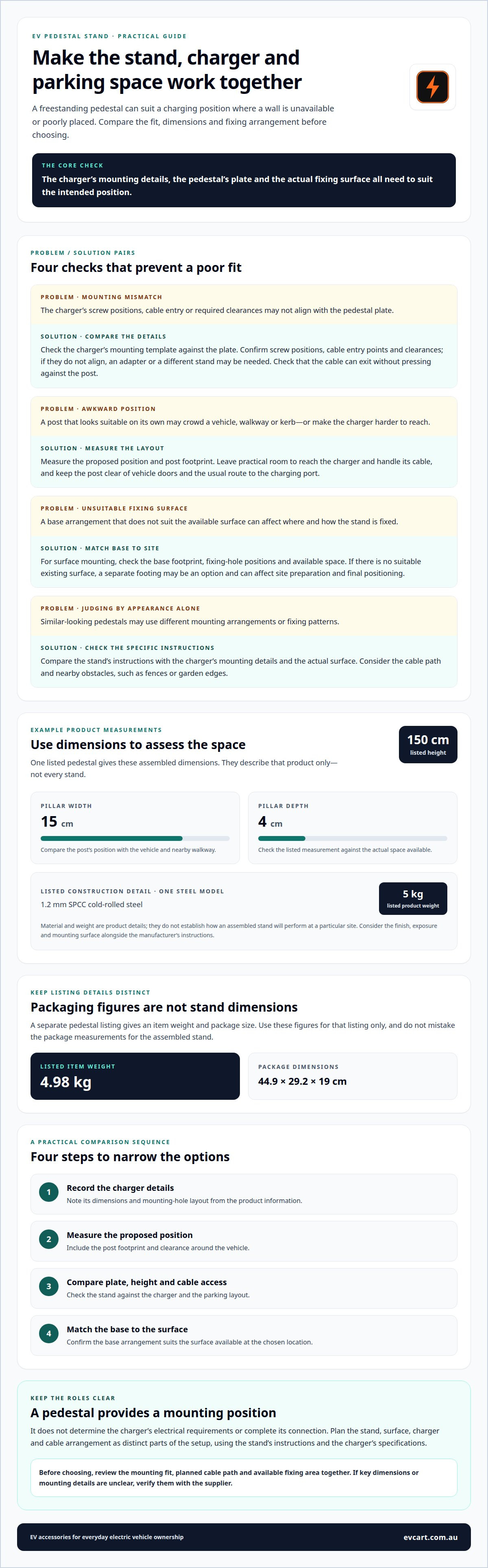
Start by checking charger compatibility. Compare the charger’s mounting template with the stand’s plate, including screw positions, cable entry points and required clearances. If the charger doesn’t align with the plate, you may need an adapter or a different stand. Check that the cable can exit the charger without pressing against the post.
Next, compare the stand’s dimensions with the parking layout. One listed pedestal is 150 cm high, with a pillar 15 cm wide and 4 cm deep. Those measurements help you assess how the post might sit beside a vehicle, walkway or kerb. Measure the intended position and allow room to reach the charger and handle its cable.
Construction matters where a stand will remain outdoors. A listed steel model uses 1.2 mm SPCC cold-rolled steel and weighs 5 kg. These details describe the material and product weight, but they don’t establish how the assembled stand performs at a particular site. Consider the finish, exposure and mounting surface alongside the manufacturer’s instructions.
Mounting options and site planning
Surface mounting fixes the stand’s base to an existing hard surface, such as a concrete pad. Before choosing this option, check the base footprint, fixing-hole positions and available space. The surface must suit the fixing method and the stand’s intended use. Keep the post clear of vehicle doors and the usual route between the charger and charging port.
A separate footing may be an option if the intended position lacks a suitable existing surface. This affects site preparation and can influence the final location. Mark out the stand and vehicle positions first, then consider cable reach, access to the charger and nearby obstacles such as fences or garden edges.
Some stands use a base plate; others have a different mounting arrangement. Don’t assume two pedestals share a fixing pattern just because they look similar. Compare the stand’s instructions with the charger’s mounting details, and plan the fixing method for the actual surface. The stand, surface and charger need to work together.
Use measurements to narrow the choice
Use this practical sequence before selecting a model:
- Record the charger’s dimensions and mounting-hole layout from its product information.
- Measure the proposed position, including the post footprint and clearance around the vehicle.
- Compare the stand’s plate, height and cable access with the charger and parking layout.
- Match the base arrangement to the surface available at the chosen location.
Packaging and item weight can also help with handling and planning. One pedestal has a listed item weight of 4.98 kg and a package measuring 44.9 x 29.2 x 19 cm. These figures describe that product only, not every stand. Keep the difference clear when comparing listings, and don’t treat package dimensions as the assembled stand’s size.
Keep the pedestal decision separate from the electrical connection. A stand provides a mounting position; it doesn’t determine the charger’s electrical requirements or complete its connection. Even a well-positioned post needs a charger and cable arrangement suited to the parking space. Use the stand’s instructions and the charger’s specifications to plan each part of the setup.
Compare the pedestal’s measurements and stated weight with the space and surface you’ve assessed. Treat these as product details, not proof that the stand suits a particular charger or fixing surface.
Before choosing a model, review the charger’s mounting fit, planned cable path and available fixing area together. Check that the product instructions cover your intended installation arrangement, and leave practical access around the post. If key dimensions or mounting details are unclear, verify them with the supplier before buying. Base your decision on the specific charger and site, not appearance or one specification alone.
EV Cart Australia: EV accessories
EV Cart Australia offers EV accessories for drivers building a practical electric vehicle setup. Explore its range for accessories that support everyday charging and ownership, alongside planning your charger’s mounting position.
A pedestal stand and an accessory serve different purposes, so keep the decisions separate. First settle the charger’s mounting arrangement and compatibility requirements. Then consider which accessories suit your vehicle and routine, such as items you use while charging or travelling. Match each choice to your model and intended use rather than assuming one option suits every EV.
To organise your setup, compare available accessories with the needs you identified while planning the charger position. Explore EV Cart Australia’s EV accessories and choose items suited to your vehicle and routine.
Make your next step a practical one
Before choosing an EV charger pedestal stand, keep the charger’s model details and intended position together. This gives you a clear reference when comparing mounting arrangements and helps organise future changes to your charging setup. Note the vehicle you charge and how you use the parking space, so you can assess whether the layout still works as your routine changes.
Once your mounting plan is settled, consider accessories that support everyday EV ownership. Choose items with your vehicle and intended use in mind, rather than adding products without a clear purpose. Explore EV Cart Australia’s range of EV accessories to find options for your setup.
Take the next step at EV Cart Australia and explore accessories for your EV. A considered setup starts with choices that suit the way you actually drive and charge.