
EV Charger Plug Holster Options for Neat Wall Storage
2026-11-09

A tidy charging setup starts with deciding where the plug will rest between drives. An EV charger plug holster gives the connector a designated place when it’s not in use, helping keep the area organised.
When choosing a holder, check connector compatibility and where it can be mounted. Consider how the plug will sit and whether the position suits your parking space and charging routine.
This guide explains what a holster does, what to consider when comparing options, and how to plan wall mounting around your charger, parking space and cable. You’ll find practical points to help choose a suitable storage option and plan its position.
Key Takeaways
- A plug holster gives your charging connector a designated place to rest between uses, helping keep the charging area orderly.
- Match the holder to your connector type so the plug sits securely in its cradle.
- Choose a mounting position that’s easy to reach from the car’s charge port and works with the cable’s natural path.
- Compare the mounting method, materials and fixing points to find an option suited to your wall or post.
- Plan the position before mounting to keep the plug accessible without creating a trip hazard or putting strain on the cable.
Table of Contents
Ev charger plug holster
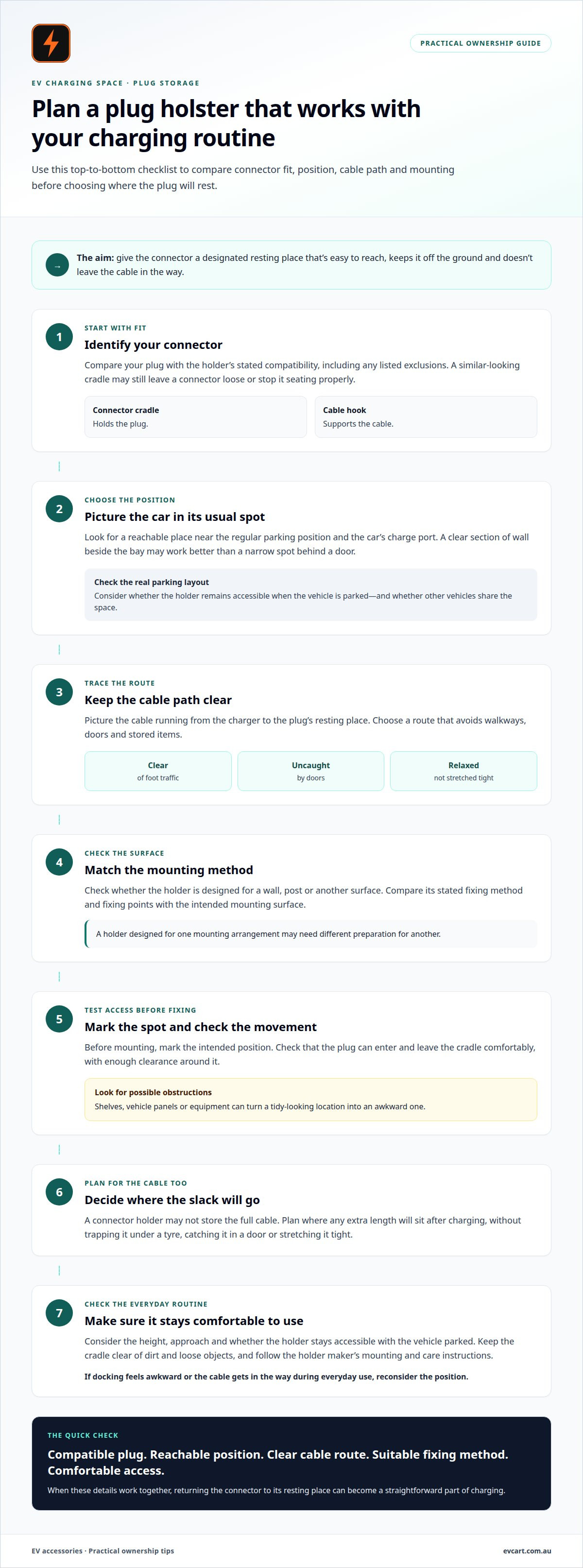
An EV charger plug holster gives a charging connector a designated resting place between sessions. It can keep the plug off the ground and make it easier to find. Since the holder’s shape and opening affect how the connector sits, compatibility matters more than colour or appearance. Identify your connector, then check the holder’s stated compatibility.
Don’t assume holders with similar shapes fit the same plugs. Compare the product description with your connector, including any listed exclusions. A mismatched cradle may leave the plug loose or stop it seating properly. Also distinguish a cable hook from a connector cradle: one supports the cable, while the other holds the plug.
Next, consider where the holder will sit. It should be reachable without pulling the cable across a walkway or around stored items. Picture the vehicle in its usual parking spot and trace the cable from the charger to the plug’s resting place. A clear section of wall beside the bay, for example, may work better than a narrow spot behind a door.
Check the mounting method before choosing a position. Some holders are designed for walls, while others may suit a post or another surface. Follow the product’s stated fixing method and consider the surface where it will be attached. A holder designed for one mounting arrangement may need different preparation for another.
- Match: Compare the connector with the holder’s stated compatibility.
- Position: Choose a reachable spot near the regular parking position.
- Route: Keep the cable’s path clear of doors and foot traffic.
- Mount: Match the holder’s fixing method to the intended surface.
- Use: Leave enough room to place and remove the connector comfortably.
Before fixing the holder, mark its intended position and check how the plug will enter and leave the cradle. Look for shelves, vehicle panels or equipment that could obstruct access. Planning first can prevent a tidy-looking position from becoming awkward in daily use.
Plan for the cable as well as the plug. A connector holder may not store the full cable, so decide where any slack will go after charging. Don’t leave the cable trapped under a tyre, caught in a door or stretched tight between the charger and holder. A relaxed route makes it easier to return the plug to its resting place.
The holder should also suit the people using the charger. Consider a comfortable height and approach, and whether it remains accessible when the vehicle is parked. If several vehicles use the area, assess each parking position before choosing a shared location. The right spot fits your routine, not just the empty wall.
Follow the holder maker’s instructions for mounting and care. Keep the cradle clear of dirt and loose objects that could stop the connector seating properly. If everyday use makes docking awkward or leaves the cable in the way, reconsider the position. A well-chosen holster makes returning the connector a straightforward part of charging.
The holster is shaped to fit standard Type 2 (Mennekes) EV plugs, so check that this is the connector you use before choosing it. It can be mounted beside a wall charger or near the parking position, on the side closest to the car’s charge port. That placement can make the plug’s resting point convenient while keeping its route near the vehicle. Consider the holder’s dimensions alongside the available space and the direction the plug needs to enter and leave the cradle. The Type 2 EV Plug Holder measures 98.5mm x 98.5mm x 4.66mm, which can help you assess whether the intended location has room for it.
The Type 2 EV Plug Holder has a screw hole size of 4.5 mm and weighs 0.1 kg. Check the fixing surface and the product’s mounting arrangement before installation, and make sure the chosen spot remains accessible when the vehicle is parked. More broadly, the California Air Resources Board says the codes include requirements for acceptable connectors, cables, attachment plugs, outlets, and other devices for charging EVs. A holster is only one part of the charging setup, so consider its fit and placement alongside the other equipment you use. Keep the connector supported without forcing it into the cradle, and leave enough clearance to remove it comfortably.
EV Cart Australia
EV Cart Australia offers EV accessories for everyday use. When choosing a plug holder, focus on connector compatibility, mounting layout and where the cable needs to sit. Use these details to narrow your options rather than choosing by appearance alone.
A tidy storage arrangement also depends on the space around the charger and vehicle. Check how the plug will reach its resting place and whether the planned position suits the holder’s fixing points. These checks help you choose an accessory without confusing plug storage with charger installation.
For help with an EV accessory question, contact EV Cart Australia.
Make your charging space work for you
Before settling on a storage arrangement, consider how the charging space is used during a typical week. A garage may need to accommodate bikes, bins or tools alongside a vehicle. Choose a plug resting place that stays clear of these everyday demands so the setup remains practical after installation.
An EV charger plug holster is one small part of a larger routine. Consider who uses the charger, how they approach the vehicle and whether the space changes when another car is parked. These details can help you choose an accessory that suits your household.
For guidance on EV accessories for your setup, contact EV Cart Australia. Choosing the right accessory is a practical step towards a charging area that feels organised and easy to use.