
EV charging cable lock options for safer home charging
2026-10-28

An EV charging cable lock can mean two different things: the vehicle’s built-in charging-port lock or a separate restraint. Some EVs have a bracket beside the charging port that accepts a padlock attached to the cable. The built-in port lock should engage once charging starts, even if the vehicle itself is unlocked.
Cable theft is worth considering, but damage is another risk: a cable left exposed or beneath a wheel can be crushed. This guide explains how vehicle charging-port locks work, how to secure a cable at home and how to store a separate cable after use. It also covers what to check before choosing an additional lock, so you can distinguish a vehicle’s built-in mechanism from a separate security device.
Key Takeaways
- Use your vehicle’s charging-port lock to help secure the connector while charging, and learn how its release works.
- Some vehicles have a bracket beside the charging port that can take a padlock attached to the cable.
- For an untethered home charger, disconnect the cable after use and store it out of sight.
- Keep cables clear of vehicle wheels to avoid damage, and position them so they don’t create a trip hazard.
- At public chargers, choose a safe spot and make sure the cable is securely connected before charging.
Table of Contents
How do I keep my charging cable safe at home?
At home, reduce exposure and prevent avoidable cable damage. Where practical, position a wall-mounted charger out of easy view, and keep the cable off driveways and walkways when it’s not in use. CCTV can help monitor the area, but it won’t physically secure the cable. Bring a portable cable indoors after charging rather than leaving it accessible outside.
Are charging cables covered by Australian EV charger warranties or theft insurance? Warranty cover depends on the manufacturer’s terms, while theft cover depends on your insurance policy. Read the exclusions and claim conditions, particularly whether the cable is treated as part of the charger or as a separate item.
What are the risks of using a third-party EV charging cable lock? A poorly matched lock can interfere with the connector’s fit or release. Compare its design with your vehicle and charger instructions. Don’t force it into place if it obstructs the connector or cable.
Do Australian public EV charging networks provide cable theft protection? Protection can vary between networks and charging sites. Choose a well-lit, visible bay, secure the connector as intended and stay nearby if the location feels exposed.
At a public charger, protect the cable and your vehicle while charging. Check that the connector is fully seated and the cable runs clear of passing vehicles before starting. Don’t leave the boot open unattended, keep valuables out of sight and lock the vehicle if you step away. Park so no one can drive over the cable.
- Choose a visible, well-lit bay, rather than an isolated corner.
- Connect the plug securely and check the cable route before charging.
- Keep the cable away from tyres, foot traffic and sharp edges.
- Close the boot and secure the vehicle before leaving it unattended.
For an untethered home charger, disconnect the separate cable after each session and store it out of sight. A cupboard or enclosed storage area keeps it away from passers-by and reduces exposure to weather. Keep the connector clean and dry, coil the cable loosely, and avoid tight bends that strain the outer sheath. A stand-alone Type 2 plug holder can provide a designated place to store the connector between charges.
Limit how long a cable is left exposed, whether at home or while travelling. Store a portable cable indoors after charging, and use the vehicle’s charging-port lock if the model has one. On a trip, stay with the car when practical and choose a visible charging location. Never park on the cable, even briefly, as the vehicle’s weight can damage it.
Make cable checks part of your charging routine. Before plugging in, look for cuts, crushed sections or a loose connector. After charging, disconnect and inspect it again, then return it to secure storage. These steps reduce exposure and damage, and help you spot wear before the next session.
Keeping an untethered home charger cable safe
An untethered charger uses a separate cable between the vehicle and charging unit. Because you choose where it goes between sessions, build storage into your routine: disconnect it, inspect it, then put it in a secure, dry place. Keeping it out of sight also limits casual access from outside the home.
That figure describes the copper, not the cable’s full replacement value or sale price. A cable also contains insulation, connectors and other materials. Treat it as valuable equipment, rather than leaving it on display beside a driveway or garage entrance.
Choose a storage spot away from vehicle wheels, foot traffic and sharp edges. A shelf or enclosed cupboard can keep the cable organised without putting pressure on its connectors. Coil it loosely rather than wrapping it tightly around the plug. Before storing it, check the outer sheath and connector for visible damage, dirt or moisture.
A stand-alone Type 2 plug holder offers a set place to park the connector between uses. A quality Type 2 EV plug holder is typically manufactured from durable ABS plastic and is designed for storing a portable EV charger or charging station securely. A holder can organise the plug, but it should not be treated as a substitute for secure cable storage.
- Disconnect the cable after charging, following the vehicle and charger instructions.
- Inspect the lead before storage, especially around both connector ends.
- Keep the cable away from damp areas, sharp edges and stored equipment.
- Choose a holder or storage spot that suits the connector and available space.
Consider an additional ev charging cable lock or anti-theft device only after checking how it fits your charger and vehicle. Look into its intended use, and avoid a design that makes the connector difficult to insert or remove normally. A lock may deter casual handling, but it doesn’t replace putting the cable away after charging. Never leave the lead where a vehicle could drive over it.
For regular charging, make storage convenient enough to use every time. Keep the cable’s route clear, return it to the same location, and avoid leaving it connected outdoors when not needed. If you’re looking for practical EV accessories to support everyday ownership through EV Cart Australia, browse the available categories and choose items that suit your setup.
Using a built-in cable lock
A built-in charging-port lock holds the connector in the vehicle inlet during a charging session. It should engage once charging starts, whether or not the vehicle is locked. This helps prevent someone pulling out the connector while power is flowing. It doesn’t fasten the cable to the charger or protect every exposed section from theft or damage.
Follow the vehicle’s normal charging sequence. Insert the connector fully, then start the session using the vehicle or charger controls. Once charging begins, the vehicle’s locking mechanism should retain the plug. For example, the port lock should still engage if the car is unlocked but actively charging. Vehicle locking and connector locking are separate functions.
To disconnect, stop the session using the vehicle or charger controls, then release the plug as the vehicle instructions direct. Don’t pull hard against a locked connector. If it won’t release, first check the vehicle display and charging status. A cable under tension, an active session or an unfamiliar release method can make removal confusing. Follow the owner’s manual rather than forcing the handle or connector.
Built-in lock designs and controls vary between EV models. Find the relevant charging settings and release steps before relying on them during a trip. The owner’s manual explains how the vehicle signals that charging has started and how to release the connector. Practise the normal sequence at home, where the cable and vehicle are easy to reach.
- Insert the plug fully before starting the charging session.
- Confirm the vehicle shows that charging has started and the connector is retained.
- Stop charging through the normal controls before attempting removal.
- Use the vehicle’s documented release process if the connector remains locked.
A built-in lock has a specific purpose: retaining the connector at the vehicle’s inlet. It won’t hide the cable, keep it off the ground or secure it to a fixed object. At home, route the cable away from wheels and walkways. When charging is finished, disconnect and store a separate cable securely. These habits address risks the inlet lock can’t prevent.
If the connector won’t lock or release as expected, check whether the session is active and whether the plug is seated correctly. Then consult the vehicle’s instructions for its lock controls. Avoid improvised tools or extra pressure, which can damage the connector or inlet. Knowing the difference between a built-in vehicle lock and a separate cable restraint helps you choose the right approach for each situation.
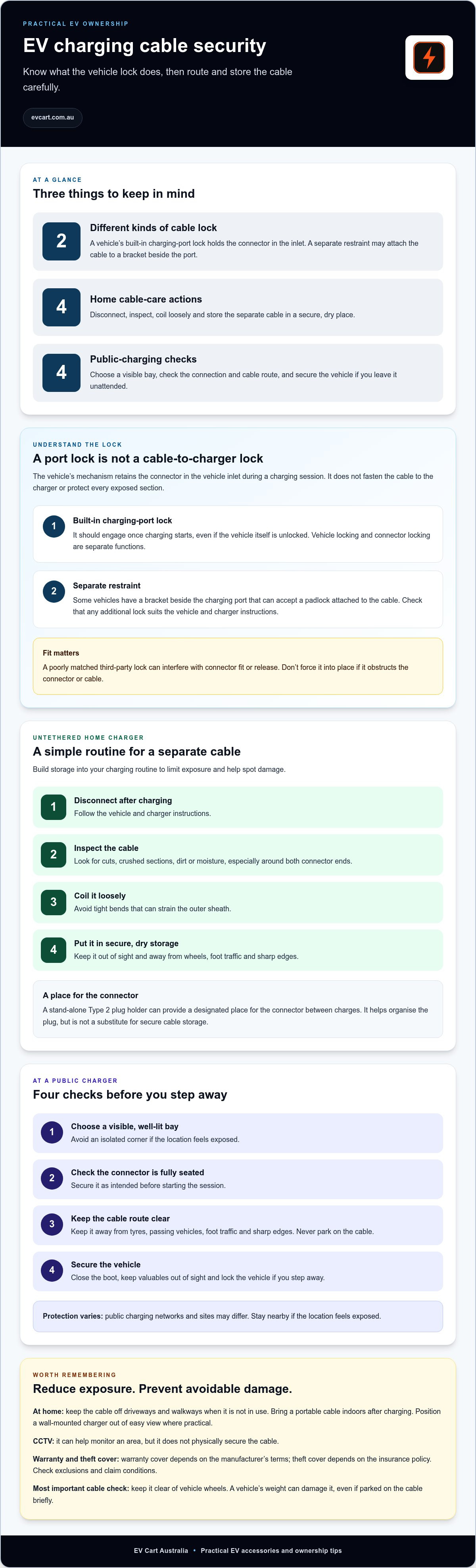
Vehicle charging-port cable locks
A vehicle charging-port lock and a separate padlock serve different purposes. The built-in mechanism holds the connector in the inlet during charging. Some EVs also have a bracket beside the port that accepts a padlock attached to the cable. This can make the cable harder to remove from the vehicle, but it doesn’t secure its full length.
Check your vehicle’s design before buying an additional lock. Inspect the charging-port area and consult the owner’s manual for a designated bracket or locking procedure. The lock must fit the bracket and cable without pressing against the connector, blocking the port door or straining the lead. Don’t assume a device that suits one EV will fit another.
Separate AC cables can have their own locking behaviour. If a 7 kW AC cable seems unsecured, check whether it locks into place during charging before treating the behaviour as a fault. Confirm that the connector is fully inserted and the session has started. A vehicle’s built-in lock may only retain the plug while charging, rather than keeping it locked after the session ends.
How do I unlock a charging cable stuck in an electric car? Stop the charging session, unlock the vehicle and follow the release steps in its owner’s manual. Don’t yank the cable. Check the display for an active session or locking status first.
- Identify whether your EV has an electronic inlet lock, a separate bracket, or both.
- Use a padlock only with a bracket designed to accept one.
- Keep the cable’s weight supported so it doesn’t pull against the vehicle inlet.
- Remove the lock before driving, then store it where it won’t be misplaced.
Think about where theft could occur before choosing a restraint. A bracket-mounted padlock connects the cable to the vehicle, while an electronic port lock retains the plug in the inlet. Neither secures a cable left unattended after charging. For a separate cable or adapter lock, check its intended connector type and attachment method. Forcing an incompatible lock can interfere with connection or removal.
Practise the normal sequence while parked at home. Insert the connector, start charging and confirm the vehicle indicates a secure connection. Stop the session and practise releasing the plug according to the manual. If the lock doesn’t engage or release, check the vehicle status and connector position before trying again. Match the restraint to your EV’s port or bracket, and don’t mistake connector retention for full-cable security.
How does an EV charging cable lock work?
A vehicle charging-port lock holds the connector in the inlet once charging begins. It should engage whether or not the car is locked. This separates cable retention from central locking: unlocking the doors doesn’t necessarily release a connector during an active session. Controls and indicators vary, so follow the owner’s manual for model-specific instructions.
The sequence is straightforward. Insert the plug fully, then start charging through the vehicle or charger controls. Once the session starts, the vehicle’s lock engages to prevent the connector being pulled out normally. To disconnect, stop charging and follow the vehicle’s release process. Don’t tug against resistance. A retained connector isn’t necessarily jammed.
The built-in mechanism protects the connection at the car, but it doesn’t attach the cable to the charger or a fixed point. If the vehicle has a bracket beside the charging port, a separate padlock may secure the cable to it. The vehicle lock holds the plug in the inlet; the padlock joins the cable to the bracket. Neither secures every part of the lead.
- Seat the connector fully in the charging inlet.
- Start the session and check the vehicle’s charging status.
- Allow the vehicle’s port lock to engage before leaving the connector.
- Stop charging and follow the vehicle’s release steps before unplugging.
If the connector won’t release, check the dashboard or charging display first. Confirm the session has stopped, then use the vehicle’s documented unlock control. A separate 7 kW AC cable can also have a locking mechanism, so check whether it is designed to lock in place during charging. Don’t force the plug or use tools; pressure can damage the connector or inlet.
A plug holder with a button release works differently from a vehicle port lock. The holder keeps a connector in place for storage, while the vehicle mechanism retains it during charging. Identify which device is holding the cable before trying to release it. If the vehicle still shows an active session, use the charging controls rather than pulling the handle.
For safer ownership, match each lock to its job: use the vehicle’s built-in mechanism during charging, and a compatible physical restraint only where the vehicle provides a suitable bracket. Then store a separate cable securely after use. Explore EV charging accessories for practical equipment to support your setup.
EV Cart Australia: EV accessories
EV Cart Australia offers EV accessories for practical electric vehicle ownership. If you’re choosing equipment for your charging routine, consider how it fits your vehicle, connector and storage needs. A suitable accessory can help keep your setup organised, but it won’t replace the vehicle’s built-in port lock or careful cable handling.
Use this guide to identify what you need before browsing. Compare accessory details with your EV and charging equipment, focusing on the task you want to solve, such as storage or everyday cable management.
Visit EV Cart Australia online to explore EV accessories.
Make your next charging setup decision with confidence
Before choosing an accessory, note your vehicle model, connector type and usual charging setup. Identify the specific gap in your routine: keeping equipment organised, carrying it between locations or adding a physical restraint. This checklist helps you focus on accessories suited to your needs, rather than buying a lock that doesn’t match the job. An EV charging cable lock should work with your setup without obstructing normal connection or release.
Keep your vehicle’s instructions handy when comparing options. They explain how the port lock works and help distinguish a built-in feature from a separate accessory. Choose accordingly, then make the right approach part of a consistent charging routine.
If you’d like to discuss EV accessories for your setup, contact EV Cart Australia for advice. Take the next step with a clear idea of what your vehicle needs.
Frequently Asked Questions
EV cable theft: Can someone steal my charging cable?
Yes, an accessible, unsecured charging cable can be taken. A vehicle’s port lock can retain the connector during charging, but it doesn’t attach the full cable to a fixed point. At home, store a separate lead indoors after use. At a public charger, choose a visible bay and keep an eye on the vehicle and cable while charging.
How secure are EV charging cables when they are charging my vehicle?
A vehicle may retain the connector during charging, though this can vary. This helps prevent someone simply pulling the plug from the inlet. It doesn’t make the entire cable theft-proof or protect it from being driven over. Check the vehicle’s charging status, and don’t treat the built-in mechanism as a substitute for sensible cable placement.
Do electric cars have a built-in charging cable lock?
Some electric cars lock the connector in the charging port during a session, but features vary by model. Some also have a bracket beside the port that accepts a padlock attached to the cable. These are separate mechanisms: the port lock retains the plug, while the bracket and padlock join the cable to the car. Check your owner’s manual for your vehicle’s controls.
How do I lock an EV charging cable at a public charger in Australia?
At a public charger, use the vehicle’s port lock and any purpose-designed restraint compatible with your car and cable. An EV charging cable lock should fit without blocking the connector or straining the inlet. Follow the charger’s on-screen instructions, confirm the session has started and choose a visible location. Keep the cable clear of tyres and don’t leave the boot open unattended.
Can you buy aftermarket EV charging cable locks in Australia, and how much do they cost?
Aftermarket cable and adapter locks come in different designs, including options for specific connector combinations. There isn’t one price for every option: cost depends on the lock type, materials and compatibility. Before buying, identify your vehicle’s connector and any charging-port bracket, then compare them with the lock’s stated fit and intended use.