
EV Floor Mats: How to Choose the Right Fit and Material
2026-10-07

A mat labelled for an EV can still be the wrong fit for your car. EV floor mats need to match your vehicle’s exact model and year, because a poor fit can leave areas exposed or shift towards the pedals. Check the fit as carefully as the material.
To choose between carpet, rubber or another option, start with how you use your car. Beach sand, red dust, muddy shoes and sudden rain can all affect how easy mats are to clean and how much of the floor you want to protect.
This guide explains how to compare fit and coverage, choose a material, and check mats before driving. You’ll also find practical care tips and ways to assess comfort, weather exposure and cleaning needs. The aim is to find a suitable mat for your vehicle and routine, not just one with an EV label.
Key Takeaways
- Match EV floor mats to your vehicle’s exact model and year, not just its badge.
- Compare front, rear and centre-floor coverage to see which areas the set protects.
- Choose a material by considering your cleaning routine, typical conditions and preferred surface feel.
- Think about who and what travels in your car, from passengers and pets to sandy shoes or work gear.
- Before fitting, check each mat’s position and make sure it stays clear of the pedals.
Table of Contents
- What makes EV floor mats different from a one-size-fits-all mat?
- How to check EV floor mat fit, coverage and pedal clearance
- Carpet, rubber and layered EV floor mats: how to compare them
- How to choose EV floor mats for your passengers, weather and cleaning routine
- A practical EV floor mat checklist before you buy
What makes EV floor mats different from a one-size-fits-all mat?
EV floor mats protect the cabin floor from dirt, moisture and everyday wear. The EV label alone doesn’t determine the right shape: fit depends on your vehicle’s make, model and relevant year or variant. A generic mat may not follow the footwell contours or line up with your car’s mat retention points.
Vehicle-specific fit means the mat is shaped and selected for the floor area of a particular vehicle configuration. Match the product details to your car, then consider how much coverage you need and what you carry. Someone who regularly brings in beach sand or muddy shoes may prioritise different coverage and easier cleaning than someone who mainly drives on dry, sealed roads.
What does vehicle-specific floor mat fit mean?
A generic mat has a broad shape intended to suit a range of vehicles. A vehicle-specific option is designed for a particular make, model and relevant year or variant. This distinction matters because floor contours, footwell dimensions and retention points can vary between vehicles and configurations.
Compare the listing details with your vehicle rather than relying on the badge alone. For a general overview of car mat purposes and types, see Car mat Wikipedia. Then check the mat’s shape and whether it covers the areas you want to protect.
Why fit matters beyond appearance
A mat can look close to the right shape and still sit poorly. If it shifts, curls or bunches, it can make the footwell uncomfortable and may interfere with clear access to the pedals. A stable position matters, especially around the driver’s feet. Follow the vehicle and mat instructions, and don’t use a mat that won’t sit securely.
Coverage matters too. A mat that leaves a large section of the footwell exposed offers less protection from grit, spills and tracked-in dirt. Check that its edges follow the floor area without folding against pedals or obstructing retention points. Rear and centre-floor coverage can also differ between sets, so consider which areas passengers use and where dirt is most likely to collect.
A practical approach is to match the mat to your vehicle details, inspect its shape and coverage, then choose a material suited to your regular driving conditions. That’s more reliable than choosing on appearance or an EV label alone.
How to check EV floor mat fit, coverage and pedal clearance
Check the product details before buying, then inspect the mats again once they're in place. Don't rely on a close-looking outline alone. Vehicle details, coverage and secure positioning all matter.
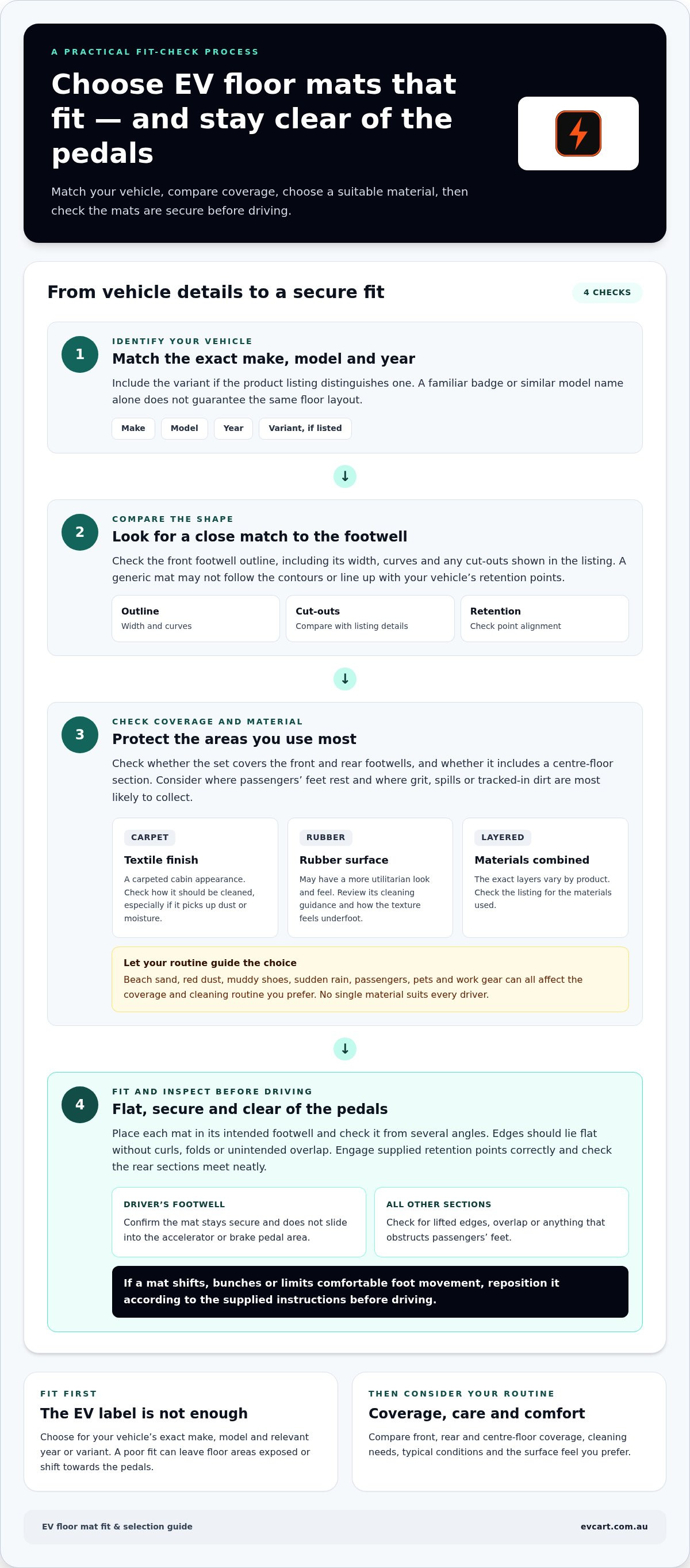
- 1. Identify your vehicle. Note the make, model and year. Include the variant if the listing distinguishes one.
- 2. Compare the shape. Look at the front footwell outline, including its width, curves and any cut-outs shown in the listing. Similar model names don't guarantee the same floor layout.
- 3. Inspect the coverage. Check whether the set covers the front and rear footwells, and whether it includes a centre-floor section. Consider where passengers' feet rest and which areas you want protected.
- 4. Check placement. Once fitted, confirm each mat sits flat and any supplied retention points engage correctly. Check that the driver's mat stays secure and clear of the pedals.
Which vehicle details should you match before buying?
Start with the make, model and year shown in your vehicle documents or owner's manual. If the product listing separates variants, match that detail too. A similar badge or model name isn't enough on its own, as floor shapes and configurations can differ.
If a listing uses a different name from the one you know, compare it with your owner's manual or vehicle details before choosing. This helps you avoid relying on a familiar-sounding name that may refer to a different configuration.
How to inspect fit once the mats are in place
Place each mat in its intended footwell and check it from several angles. The edges should lie flat, without curls, folds or unintended overlap. Make sure the mat doesn't ride up against the trim or cover a retention point.
Mats must stay secure and clear of the accelerator and brake pedals. With the vehicle safely parked, check that the driver's mat can't slide forward into the pedal area during normal use. If it shifts, bunches or limits comfortable foot movement, reposition it according to the supplied instructions before driving.
Check the rear as well. Look at how each mat covers the footwells and whether separate sections meet neatly across the centre floor. Sections shouldn't overlap in a way that makes them lift or obstruct passengers' feet. For more practical EV accessories, explore EV accessories at EV Cart Australia.
Carpet, rubber and layered EV floor mats: how to compare them
Material affects how the cabin feels and how much effort it takes to keep the footwells tidy. Think about what regularly lands on the floor, how often you’re prepared to clean it and the finish you prefer. No single material suits every driver.
Choose mat material to match your driving conditions and care preferences, not the EV label alone. Use the comparison below as a starting point, then read the product description and care instructions before deciding.
| Construction | Surface and appearance | Useful questions to consider |
|---|---|---|
| Carpet | Fabric surface with a carpeted cabin appearance. | Do you prefer a textile finish? Check how the material should be cleaned, especially if it regularly picks up dust or moisture. |
| Rubber | Rubber surface, which may have a more utilitarian look and feel. | Would you find this surface practical for frequently used footwells? Review the product’s cleaning guidance and how its texture feels underfoot. |
| Layered | Combines different materials in one mat. The exact layers vary by product. | Check the listing to see which materials are used, whether a layer can be removed, and how each part should be cared for. |
When might carpet floor mats suit your routine?
Carpet mats are worth considering if you want the footwell to retain a carpeted cabin finish. The fabric surface may look closer to the vehicle’s interior than a more utilitarian mat, but appearance alone won’t tell you how it handles everyday dirt.
Care depends on the material and its instructions. Before choosing, check whether the recommended cleaning routine suits your habits. If passengers often bring in dust or damp dirt, consider how willing you are to clean and dry the mats as directed.
When might rubber or layered mats be worth comparing?
Rubber and layered styles are options to compare for footwells that see frequent use, wet shoes or muddy gear. Look at the surface, edges and cleaning instructions rather than assuming every mat in a category performs the same way.
A layered design combines materials, but the product details should specify its construction. Check what each layer is made from and how it should be cleaned. The most practical EV floor mats balance your preferred cabin feel with a care routine you can maintain.
How to choose EV floor mats for your passengers, weather and cleaning routine
Start with what your car carries and where dirt tends to collect. Regular passengers, pets, beach trips, dusty roads and work gear all put different demands on the cabin floor. Australian driving conditions vary, so choose for your own routine rather than assuming one mat style suits every household.
Which mat features matter for everyday driving?
Think about who uses the car most. If passengers regularly sit in the back, compare a full-cabin set with front-only coverage. If you usually drive alone, you may prefer to prioritise the driver’s footwell. Check which areas the product covers, then consider whether each section suits the shape and use of the relevant footwell.
- Passengers: Frequent rear-seat use can make rear coverage more useful.
- Pets and outdoor activities: Consider where paws, sand, mud or damp gear are likely to leave dirt.
- Work gear: Boots and equipment may bring dust or debris into the footwell.
- Cleaning routine: Choose a surface and care process you can keep up with.
Balance coverage with the finish you prefer. A carpeted surface may better suit your preferred cabin appearance, while another material may feel more practical for your routine. Check the mat edges and separate sections against the intended floor area so they don’t create awkward gaps or overlap.
How should you care for floor mats?
Care depends on the mat’s material and construction. Before using a cleaner or washing method, read the manufacturer’s instructions. Remove loose dirt first, then follow the product-specific guidance. Don’t assume a method suitable for one type of mat will suit another.
After cleaning, let the mats dry as directed before putting them back in the vehicle. Refit each one in its intended position and check that it sits flat and remains clear of the pedals. This routine keeps cleaning manageable while helping you check the mats are correctly placed.
Before choosing EV floor mats, weigh up passenger coverage, typical weather and how often you’re willing to clean them. For accessories to support your EV ownership routine, explore EV accessories at EV Cart.
A practical EV floor mat checklist before you buy
Use this checklist to narrow down your options instead of choosing on appearance alone. The exact listing details matter: an EV model name by itself may not identify the right year, variant or floor layout.
What to confirm before selecting a set
- Vehicle match: Compare the make, model and year in the product information with your vehicle details. Match the variant too if the listing distinguishes one.
- Coverage: Check which areas are included, such as the front footwells, rear footwells and centre floor. Read whether separate pieces are sold together or listed individually.
- Material: Choose a surface that suits your usual conditions, preferred cabin finish and cleaning routine. Follow the product’s care guidance rather than assuming all materials can be cleaned the same way.
- Placement: Look for information about how the mats sit and any retention points. The driver’s mat must stay securely positioned and clear of the pedals.
If the listing uses a different vehicle name from the one you commonly use, compare it with your owner’s manual or vehicle documents. Similar model names don’t necessarily mean identical floor shapes.
What to check before driving with new mats
Remove the existing mats if placing the new ones over them could cause movement, bunching or reduced pedal clearance. Fit each mat in its intended position, then check that it lies flat without folded edges or unintended overlap.
Check the driver’s footwell carefully. The mat must remain secure and leave the accelerator and brake pedals unobstructed. Inspect the rear sections too, making sure they align as intended and don’t shift into passengers’ foot space. After cleaning or repositioning a mat, repeat these checks before driving.
For a broader view of practical ownership accessories, read the Australian EV accessories buyer’s guide. Choosing EV floor mats comes down to matching vehicle details, coverage and care needs, then checking placement in the cabin.
Ready to explore accessories for your EV? Browse EV accessories at EV Cart.
Choose mats that suit your vehicle and routine
The right EV floor mats match your vehicle’s exact details, the coverage you need and your daily routine. Check the make, model, year and relevant variant in the product information, then compare the material with your preferred cabin finish and cleaning habits.
Before driving, make sure each mat lies flat and stays in place. The driver’s mat must remain clear of the accelerator and brake pedals. These checks help you make a considered choice, whether your priority is a tidy cabin, protection from everyday dirt or easier care.
Use the same approach when comparing other EV accessories: focus on the details that fit your vehicle and how you use it. Explore EV accessories at EV Cart Australia for practical additions to your EV. Taking care when choosing can make everyday ownership feel more organised.
Frequently Asked Questions
Are EV floor mats different from regular car mats?
Not necessarily in material, but the fit should match the vehicle rather than simply carry an EV label. Floor shape, footwell contours and retention points vary between vehicles and can differ by year or variant. Treat EV floor mats as cabin protection, then compare the exact vehicle details in the listing. A mat isn’t the right fit just because it’s described as suitable for electric cars.
How do I know whether floor mats will fit my electric car?
Compare the product details with your car’s make, model and year, including its variant if the listing distinguishes one. Don’t rely on a similar model name or vehicle badge alone. Check the mat’s shape and the areas covered, such as the front footwells, rear footwells and centre floor. Your owner’s manual or vehicle documents can help resolve differences in naming or configuration.
Are rubber or carpet floor mats better for an EV?
Neither is better for every driver. Carpet mats may suit you if you prefer a carpeted cabin finish, while rubber mats may be worth comparing for frequently used footwells or exposure to wet and muddy shoes. Cleaning requirements depend on the specific material and product instructions. Compare the surface, care guidance and your usual driving conditions rather than assuming every product in a category performs the same way.
Can floor mats interfere with the accelerator or brake pedals?
Yes. A mat that shifts, bunches or has curled edges can enter the driver’s pedal area and obstruct comfortable foot movement. Before driving, check that the mat lies flat, stays in its intended position and remains clear of both the accelerator and brake pedals. Use any supplied retention points as directed. If the mat won’t stay secure, don’t drive with it in that position.
Do EV floor mats need to cover the rear footwell as well?
Rear coverage depends on who regularly travels in your car and which areas you want to protect. If passengers often sit in the back, compare sets that include rear footwell coverage. Check whether the centre-floor area is included and whether rear pieces are part of the same set. If you rarely carry rear passengers, you may prefer to prioritise the areas that see the most use.
How do I clean electric car floor mats?
Follow the care instructions for the specific mats, as cleaning methods can vary by material and construction. Start by removing loose dirt, then use only the cleaning approach described by the manufacturer. Don’t assume a cleaner or washing method is suitable for every mat type. Let the mats dry as directed before refitting them, then check that they sit flat and remain securely positioned.
Should I remove the original mats before fitting new EV floor mats?
Remove the original mats if stacking them with the new ones could cause movement, bunching or reduced pedal clearance. Fit the new mats in their intended positions and check that each one lies flat and stays put. Pay close attention to the driver’s footwell: the mat must not obstruct the accelerator or brake pedals. Recheck placement after cleaning or repositioning the mats.