
How to Choose an EV Sunshade for Your Car and Cabin
2026-10-22

A vehicle-specific EV sunshade is the most practical first step for protecting a parked car’s cabin from direct sun. Start with a windscreen shade that fits closely, then add side, rear or panoramic-glass coverage where your vehicle needs it. A windscreen sunshade can reduce cabin temperature by up to 15 degrees Celsius.
Sunlight through the glass can leave the dashboard, seats and steering wheel uncomfortably hot. An EV sunshade with a close fit, suitable coverage and easy installation is more likely to be useful than a one-size-fits-all cover.
This guide explains how to choose an EV sunshade for your vehicle, compare coverage and materials, and fit and care for it properly. It also sets realistic expectations about what a shade can do for the cabin and when additional window coverage may help.
Key Takeaways
- Choose a shade made for your vehicle’s model and glass area, and measure the windscreen if you’re selecting a size-based option.
- Use windscreen coverage to limit direct sun on the dashboard and cabin, then consider additional window shades for exposed glass.
- Fit and remove the shade carefully, keeping it secure and clear of the driver’s view and vehicle controls.
- Keep removable shades out of the driver’s field of vision while driving, and account for Australian state and territory rules when choosing window coverage.
- Protect tint, sensors, cameras and trim by avoiding pressure, abrasive contact and coverage over components that need an unobstructed view.
Table of Contents
Vehicle-specific shade options
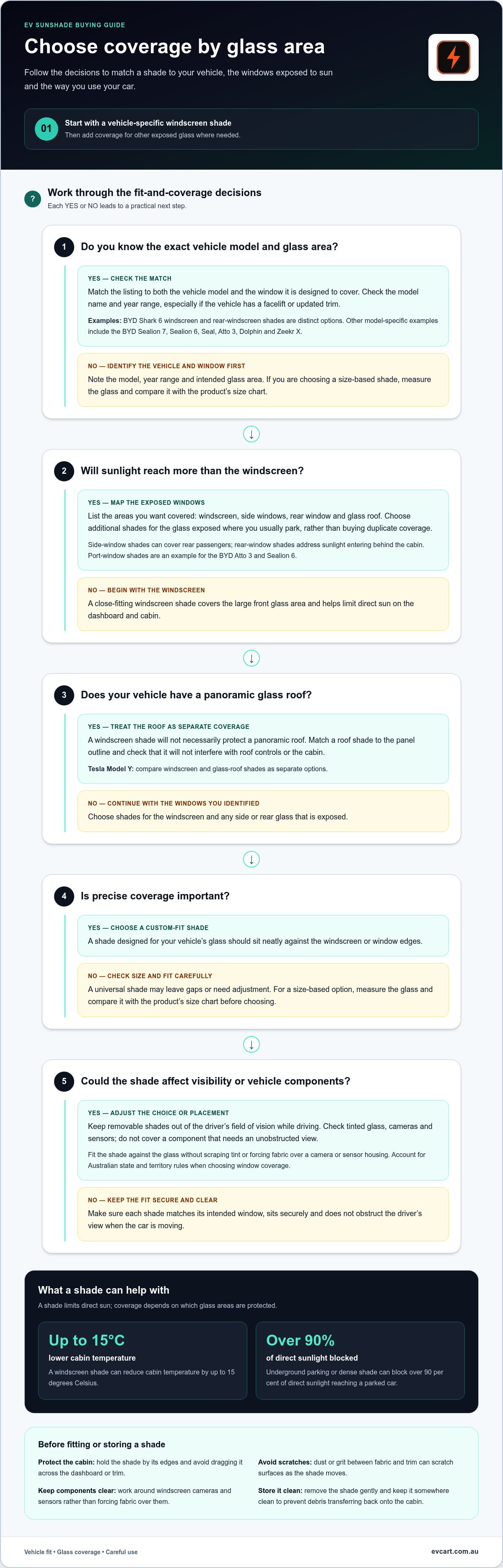
- Match the shade listing to your exact vehicle model and glass area. A BYD Shark 6 windscreen shade is different from its rear-windscreen option. Other model-specific examples include the BYD Sealion 7, Sealion 6, Seal, Atto 3, Dolphin and Zeekr X. Check the model name and year range before choosing, especially when a vehicle has a facelift or updated trim.
- Choose coverage according to where sunlight enters your parked car. A windscreen shade covers the large front glass area, while separate rear or side-window shades address other exposed windows. For example, the BYD Shark 6 has distinct windscreen and rear-windscreen shade options. If you park in an underground garage or dense shade, over 90 per cent of direct sunlight reaching the car can be blocked.
- Choose a custom-fit shade when precise coverage matters. Designed for a specific vehicle’s glass, it should sit neatly against the windscreen or window edges. A universal shade may leave gaps or need adjustment. For a size-based option, measure the glass and compare it with the product’s size chart before choosing.
- Treat a Tesla’s glass roof as a separate coverage area from the windscreen. A roof shade needs to match the panel’s outline and fit without interfering with roof controls or the cabin. A windscreen shade won’t necessarily protect a panoramic roof. Tesla Model Y owners should compare windscreen and glass-roof shades as separate options.
- Plan car window sun shades by window, not just by vehicle. Side-window shades can cover rear passengers, while rear-window shades address sunlight entering behind the cabin. Examples include port-window shades for the BYD Atto 3 and Sealion 6. Check that each shade matches the intended window, sits securely and doesn’t block the driver’s view when the car is moving.
- Before buying, list the areas you want covered: windscreen, side windows, rear window and glass roof. Note which ones are exposed where you usually park, then choose shades for those areas. This helps avoid buying duplicate coverage while leaving another window exposed. For a Tesla or BYD with multiple glass panels, check which specific window each shade is designed to cover.
Dashboard and cabin preservation
Use shades to reduce direct sun exposure, and keep the glass and cabin surfaces clear. Check that the shade does not obstruct cameras or sensors.
-
Check effects on tint, sensors and cameras
Before fitting a shade, check the tinted glass, windscreen cameras and sensor areas. Keep the material clear of camera housings and avoid blocking a sensor’s view. Position it against the glass without scraping the tint. If a component sits behind the windscreen, work around it rather than forcing fabric over the housing.
-
Consider effects on interior trim
Hold the shade by its edges and avoid dragging it across the dashboard. Dust or grit caught between the fabric and trim can scratch surfaces as the shade moves. Keep stiff corners away from the dashboard, pillars and roof lining when fitting or storing it. Remove it gently and store it somewhere clean to prevent debris transferring back onto the cabin.
- Cover the dashboard during long outdoor parking. Direct sunlight through the windscreen can heat exposed surfaces and fade materials over time. A windscreen shade can reduce cabin temperature by up to 15 degrees Celsius. Fit it close to the glass, with reflective material facing outward, to limit sunlight reaching the dashboard, steering wheel and front seats.
- Compare protection claims by measure. UPF describes ultraviolet protection, while heat rejection describes solar heat reduction. Premium electric car shades can reject up to 80 per cent of solar heat, and a UPF 50+ rating is an example of high UV protection. Check which measure the shade uses. Don’t treat a heat-rejection claim as proof of the same UV protection.
- Reduce exposure across the cabin. A windscreen shade protects the front dashboard, but side and rear glass can still admit sunlight. Add matching window coverage where sunlight falls on seats, door trim or other surfaces. High-quality electric car shades typically block 99 per cent of ultraviolet radiation. Coverage depends on the window area protected, so identify exposed sections before selecting additional shades.
- Use shade alongside careful parking. Choose covered parking or dense shade when available, then fit the windscreen cover before leaving the vehicle. Dense shade or an underground garage can block over 90 per cent of direct sunlight reaching a parked car. A shade remains useful when covered parking isn’t available, particularly when glass faces direct sun for extended periods.
Installation
Fit the shade while the vehicle is parked and switched off. Follow its attachment instructions, and keep the driver’s view clear.
- Prepare the cabin. Park safely and switch off the vehicle before starting. Remove loose items from the dashboard and seats. Clean the glass with a soft, suitable cloth, then let it dry. Dust trapped behind a shade can mark glass or trim during fitting. Keep the shade folded or rolled until the mounting area is ready.
- Check the orientation. Hold the shade against the intended window before fitting it. Identify the top and lower edges, along with any cut-outs for mirrors or fittings. For a windscreen shade, align the centre first, then position each side. Don’t stretch the fabric or force a rigid frame against the glass.
- Use the supplied fittings. Follow the product instructions for clips, supports or other attachments. Don’t add adhesive, tape or fasteners that weren’t designed for the vehicle. Press each fitting gently into place. If an edge buckles or the shade shifts, remove it and realign it rather than forcing it.
- Check clearance around equipment. Keep the shade clear of rear-view mirrors, camera housings, sensors and movable visors. Make sure it doesn’t press on windscreen wiring or trim. From the driver’s seat, check that the shade is secure and doesn’t block your forward view. Remove it before driving if it obstructs visibility.
- Fit side and rear shades separately. Match each shade to its intended window before attaching it. Move the window only as the fitting instructions allow. Check that door seals close normally and the shade doesn’t catch when you open the door. Test each window carefully before regular use.
- Install powered shades to their stated requirements. The research guide recommends confirming a powered shade operates on 12 V DC. Check its intended connection and cable route before use. Keep wiring away from moving parts and controls. The guide also recommends quiet motor operation below 45 dB, so listen for unusual noise during its first cycle.
- Test the finished fit. Inspect the shade from inside the cabin and check its edges for gaps or loose sections. Operate any relevant doors, windows and visors to confirm nothing catches. A standard electric shade installation takes 15-30 minutes, according to the research guide. Allow time for alignment rather than rushing the final checks.
- Remove and store the shade carefully. Release the fittings in reverse order, supporting the shade as it comes away. Don’t pull sharply on fabric, clips or electrical leads. Fold or roll the shade as directed, then store it away from grit and damp. Clean storage helps prevent dirt transferring to the glass next time.
Are there Australian road rules or legal restrictions on car window sunshades?
- Distinguish removable shades from window tint. A removable sunshade and applied window film are different products. In Australia, tinting the front windscreen is legal, but tint rules vary between states and territories. Don’t assume rules for tint also apply to a removable shade. Consider the product type and the glass area before deciding how to use it.
- Consider where the shade sits. Windscreens, front and rear side windows, and rear windows affect the driver’s view differently. The key question is whether a shade obstructs visibility from the driver’s seat. Use removable shades while parked, and take off any that interfere with your view before driving.
- Keep the forward view clear. Before moving off, check the road through the windscreen from the driver’s seat. Look for fabric, frame edges or suction fittings in your line of sight. A shade that shifts during travel can create an obstruction, even if it seemed clear while the vehicle was parked.
- Check side-window visibility from the driver’s seat. A front side-window shade may block your view of traffic, pedestrians or cyclists. Remove it before driving if it obstructs your view through that window. Rear passenger shades sit behind the driver, but check your mirrors and rearward visibility after fitting them.
- Allow for state and territory differences. Australia does not have one uniform tint rule for every jurisdiction. If you use applied film as well as a removable shade, treat them as separate decisions. Consider the window’s position, the material and its effect on visibility. Don’t rely on another state’s tint requirements for your vehicle.
- Build a parking and driving routine. Store the shade so you can remove it before setting off. Check the windscreen and side windows, then make sure the mirrors are unobstructed. If someone else drives the vehicle, show them which shades need to come out. This helps prevent a parked-car setup from staying in place on the road.
- Review the setup after changes. Recheck visibility if you move a shade, change its fittings or add window film. A clear view from the driver’s seat matters more than full glass coverage while travelling. Use shades to protect the cabin when parked, and remove any that obstruct your view before driving.
Can EV sunshades damage tint, sensors, cameras or interior trim?
Prevent damage by avoiding unnecessary contact, pressure and movement while fitting a shade. Check the glass, windscreen equipment and surrounding trim before use.
- Inspect the glass and tint first. Check for dust, grit, scratches or lifting film before placing a shade against tinted glass. Debris between the shade and window can rub against the surface during fitting or removal. Clean the glass with a suitable soft cloth, then fit the shade without dragging it across the tint.
- Keep cameras and sensors clear. Locate windscreen camera housings and sensor areas before positioning the shade. Material pressing against a housing can shift or sit unevenly. Use the intended cut-outs, if provided, and don’t force material over a component. After fitting, check the driver’s view and camera area.
- Test the fit without forcing it. Place the shade gently against the correct window and check its edges. Reposition a frame that bows, catches or presses hard against a pillar. Remove and realign it rather than applying more pressure. An even fit helps reduce rubbing and keeps the shade away from delicate fittings.
- Protect dashboard and pillar trim. Hold the shade by its edges when fitting or removing it. Don’t scrape rigid corners across the dashboard, door trim or roof lining. For example, fold a windscreen shade away from the A-pillar instead of dragging it along the trim. Keep fasteners from pressing into soft surfaces.
- Check suction fittings and clips. Place each fitting on the intended glass area, away from sensors and trim edges. Avoid attaching clips where they pinch a seal or pull against a camera cover. If a fitting leaves a mark or comes loose, remove it and adjust its position before using the shade again.
- Check for contact when moving a window. Before raising or lowering a window with a side shade fitted, check its edges and attachment points. Material caught in a seal can crease, tear or shift. Keep door seals clear, and open the door carefully to stop the shade snagging on the frame.
- Store the shade clean and dry. Fold or roll it as designed, keeping grit away from the surface that touches the glass. A dusty cover can transfer debris to the tint or trim next time. Store clips with the shade rather than loose on the dashboard, where they can scratch interior surfaces.
- Recheck after each installation. Look for rubbing marks, loose fittings or displaced trim after removing the shade. If you’re comparing options, browse EV accessories and match the shade to your vehicle’s intended glass area.
EV Cart Australia: EV accessories
EV Cart Australia offers EV accessories for practical electric-car ownership. Once you’ve identified the glass areas you want to shade, use your vehicle’s make, model and year to guide your choice. Match an accessory to its intended use and consider how it fits your parking routine and cabin-care priorities.
A considered choice helps you focus on accessories that suit your vehicle, rather than buying items you won’t use. Browse the available EV accessories and choose options that fit your ownership needs.
Visit evcart.com.au to explore EV Cart Australia’s accessories.
Make cabin protection part of your parking routine
Choose an EV sunshade as part of preparing your car for regular use, rather than waiting for the hottest day. Keep your preferred shade within easy reach and make fitting it part of your routine when parking in direct sun. Consistent habits help protect the cabin without rushing the fit or forgetting to check visibility before driving.
Your next step is to choose an accessory that suits your vehicle and needs. Consider which glass you want to cover, how often you park outdoors and how easily you can store the shade between uses. A practical option should fit your everyday routine, not add a task you’ll avoid.
For help choosing an accessory, contact EV Cart Australia. Take the time to choose a shade that fits your car and the way you use it, then make cabin care a straightforward part of every drive.
Frequently Asked Questions
What Is the Most Effective Interior Sun Protection Equipment?
A reflective windscreen cover is a practical starting point for reducing direct sun on the front cabin. For broader coverage, choose additional shades for the glass exposed where you usually park. Covered parking also limits direct sunlight. Consider your routine: a shade that’s easy to fit and store is more likely to be used consistently than one that’s awkward to handle.
How does an EV sunshade work?
An EV sunshade sits against or near vehicle glass to reduce direct sunlight entering through that area. Reflective material sends some sunlight away, while the covered glass casts shade over nearby cabin surfaces. Its effect depends on the coverage, material and fit. A shade is a passive accessory, so it does not cool the cabin by itself or replace the vehicle’s climate-control system.
What types of sunshades fit electric vehicles?
Common options include windscreen covers, side-window shades, rear-window covers and separate panoramic-roof shades. Some attach temporarily for parking; others are designed to stay fitted. Powered versions use a motor and have their own installation requirements. Choose by identifying the glass you want to cover, then check how the attachment method works with your vehicle’s windows and interior.
Which sunshades fit popular EVs in Australia, such as Tesla, BYD and Hyundai?
Fit varies with the exact model, year, body shape and glass configuration. When comparing shades for a Tesla, BYD or Hyundai, use the full model name and model year. Check whether the listing covers the windscreen, roof or another window. A shade for one trim or generation may not fit another, even when both vehicles share a model name.
Are custom-fit EV sunshades better than universal shades?
Custom-fit shades are made for a particular vehicle’s glass shape, which can make alignment easier. Universal shades suit different vehicles, but their dimensions may leave gaps or overlap the edges. Consider your priorities: close coverage, easy removal, storage space or use in more than one car. Compare them with the product’s fitment details before choosing.
Do windscreen sunshades help reduce EV cabin heat and battery use?
A windscreen shade can reduce sunlight entering through the front glass and help limit heat build-up while parked. This may reduce the cooling needed when you return, but it does not guarantee a particular change in battery use. Climate settings, outdoor conditions and parking exposure also affect energy demand. Treat the shade as one part of cabin heat management, not as a battery-efficiency device.
How do you measure and install a shade?
Measure the intended glass area, including its shape and curved edges, then compare it with the product’s fitting guide. Note mirror mounts, sensors and other obstructions that may affect placement. Align the shade gently and use only its intended attachment method. Before driving, check that it doesn’t press against interior trim or obstruct your view.
Where can you buy EV sunshades in Australia, and what warranties or returns apply?
For an Australian purchase, start with the relevant product information on EV Cart Australia’s website. Match the listing to your vehicle and intended glass area before ordering. Warranty and return conditions depend on the terms for the specific purchase, so read them before completing checkout. Keep your order details for future reference.